Menu
From Disagreements to a Common Market
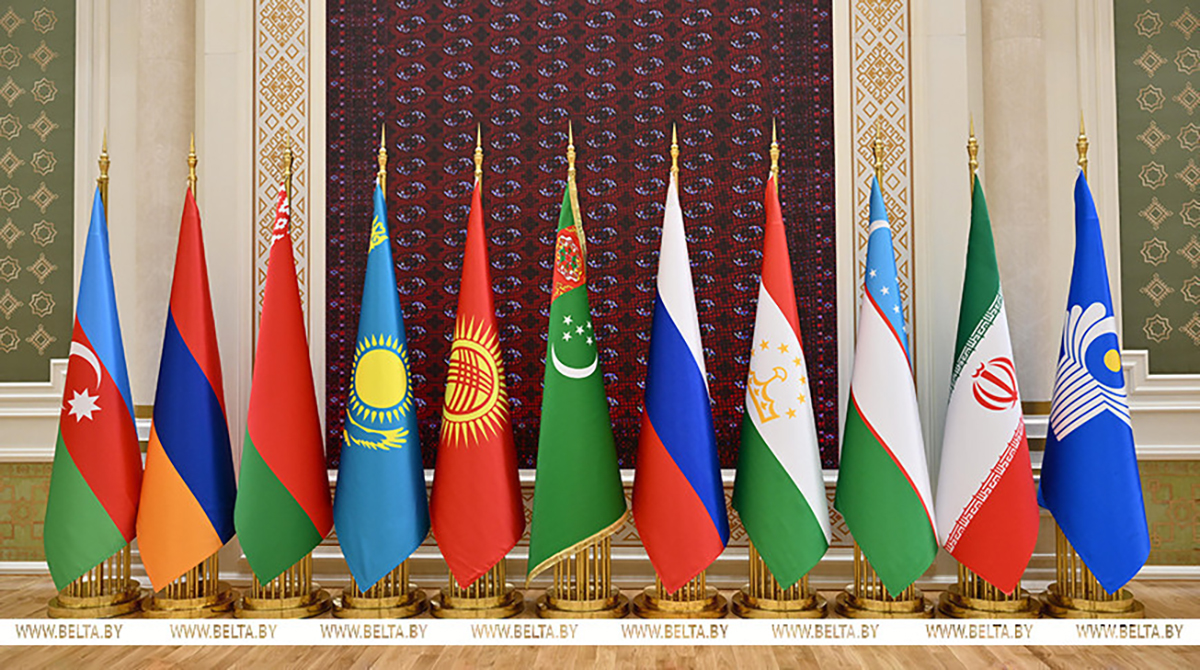
Over the past 35 years, the Commonwealth of Independent States has undergone significant changes: Georgia, Ukraine, and Moldova have left it, and Armenia may also be considering following in their footsteps. Nevertheless, the CIS still needs its participants. At a recent summit, Alexander Lukashenko reminded everyone of the main point: in order for the organization not to fall apart, the participating countries need a common economy and functioning transit.
This is dictated by the times. After all, the conditions have changed today. Western markets, which once seemed closer and more beneficial, are now closed to the Commonwealth. Now, the main value is the internal market and common resources. If the CIS countries do not trade with each other and continue to dwell on past grievances and disagreements, the organization will simply disappear. As our President joked, we will reach a point where we won't even be able to borrow snow from each other in the CIS during winter.
The main economic news at the summit was the opening of a route through the Caspian Sea. After Armenia and Azerbaijan reconciled, and Russia and Iran found themselves under the same sanctions, direct transit of goods bypassing the West became possible: from north to south and from west to east. This route is a huge opportunity for everyone. However, in order for it to operate at full capacity, it is necessary to complete the infrastructure. Currently, Iran lacks 160 kilometers of railway on the "Rasht-Astara" section. Due to this, goods have to be reloaded several times from ships to trains and then to trucks. Work is already underway, and the full launch of the corridor is a matter of near future.
The Caspian Sea is becoming the main crossroads of the world for the entire CIS. In order for the corridor to function fully, it is necessary to accelerate integration and admit Iran to the Commonwealth, while also offering our peoples new large-scale projects. This is exactly what was discussed at the summit. As the Belarusian leader noted, this is not just politics, but pure economics. The union vitally needs functioning transit and new sales markets for its goods. Otherwise, the CIS will remain a union of post-Soviet republics, where the younger generation will soon stop understanding the Russian language if it does not find practical application in business. By accepting Iran and launching joint projects, people will get jobs and an interest in cooperation. The CIS must become a functioning economic union where it is beneficial for everyone to trade with each other.
Meanwhile, as major roads are being built, cooperation is underway on the ground. In the energy sector, Russia is helping Belarus complete a nuclear power plant, which has long been providing cheap electricity to Belarusian homes. In agriculture, Russia, Kazakhstan, and Uzbekistan are creating joint "grain corridors" to sell flour and grain together on Asian markets, dictating their own prices. As for industry, Belarusian machinery and tractors are once again being supplied in large quantities to Russian factories, while Russian fertilizers are helping to harvest record crops in Kazakhstan. Other large-scale initiatives are also being implemented.
Svetlana Motornaya, LK.