Menu
From +1.3% to +34.5%. How fuel prices changed in different EU countries
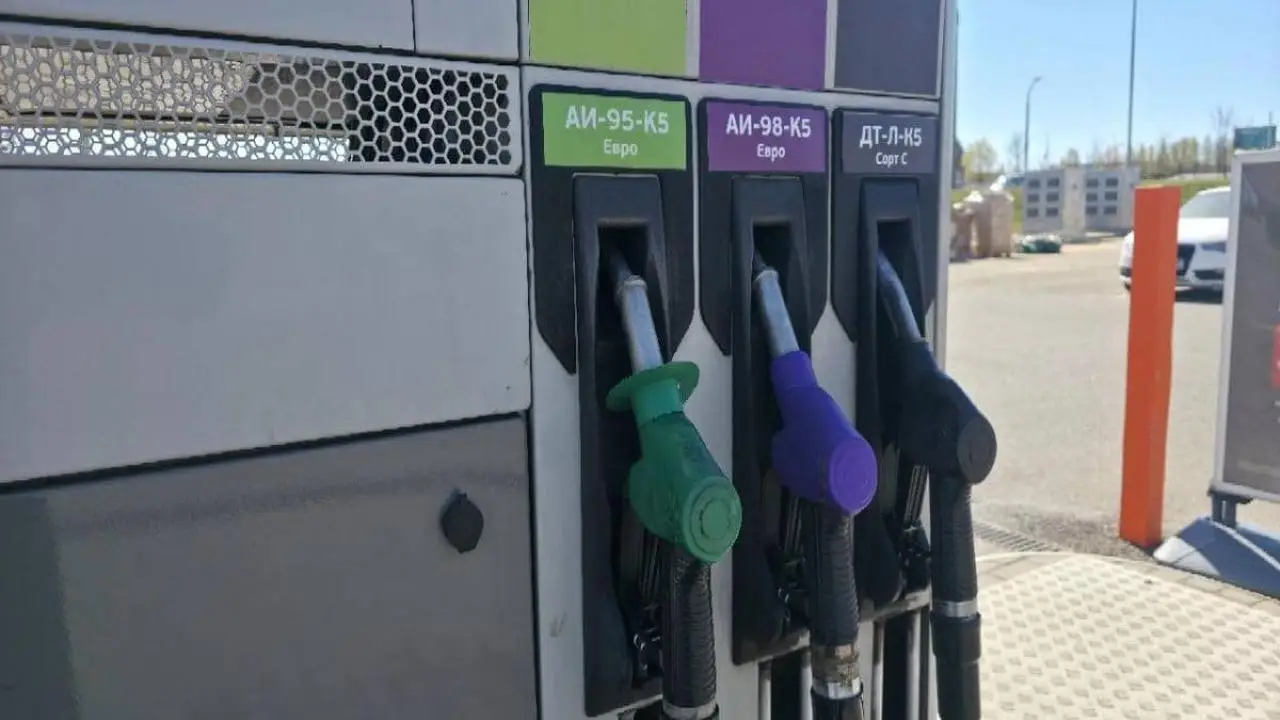
In August 2026, prices for motor fuel and lubricants for personal transport in the European Union rose by 23.8% year-on-year. This is according to Eurostat data published on September 22, 2026.
Price growth has been accelerating for several consecutive months: in July, fuel gained 16.9%, in June — 13.7%, in May — 20.7%, in April — 20.8%, in March — 12.9%. Before February, fuel prices were mostly declining both across the EU as a whole and in most member states.
Who was hit hardest
The sharpest price jump was recorded in Bulgaria. In the last month of summer, fuel and oils there cost 34.5% more than a year earlier. In Lithuania, prices rose by 28.8%, in Finland — by 27.6%, in Germany — by 27.5%, in France — by 27.4%.
In 18 of the 27 EU states, price growth rates exceeded 20%. This means that the rise in fuel prices affected the vast majority of the union's countries.
Where fuel rose the least
The most modest price increase was in Hungary — just 1.3%. In Sweden, it was 6.1%, in Ireland — 11.7%. These countries showed the most restrained dynamics against the backdrop of the overall acceleration of inflation in the fuel segment.
It is worth noting that in Hungary in August there was even a slight decline in gasoline prices — by 0.6% relative to July. A similar trend was recorded in Denmark (-0.3%) and Slovakia (-0.1%).
Month-on-month dynamics: diesel rises faster than gasoline
Comparing August with July 2026, diesel fuel in the EU rose by 8.3%, while gasoline rose by 3.3%. In July, the monthly increase was 4.3% for diesel and 4.7% for gasoline.
Diesel became more expensive in 26 EU countries. The largest monthly increase was recorded in the Czech Republic (+14.3%), Bulgaria (+13.5%) and Luxembourg (+12.3%). The smallest — in Italy (+5.2%), Romania (+6.1%) and the Netherlands (+6.2%).
As for gasoline, price increases were noted in 22 countries, declines in three, and prices remained stable in two more countries. Leaders in monthly growth: Spain (+8.2%), Romania (+6.6%), Italy (+6.3%) and Cyprus (+6.2%).
What is behind the price rise
The rise in fuel prices in Europe is the result of a combination of several factors. Among them are volatility in global oil markets, seasonal growth in demand during the summer period, as well as logistical constraints.
In addition, prices are affected by excise duties and taxes, which differ significantly across EU countries.
For example, from January 1, 2026, France reduced excise taxes on Eurosuper 95 gasoline and diesel fuel, while Lithuania, on the contrary, increased indirect taxes on Eurosuper 95. Bulgaria switched to the euro at the start of the year, which could also have affected price dynamics.
Another factor is the expected U.S. ban on diesel exports. The European Union is counting on Washington to abandon these plans, fearing that such measures are not in the interests of either the EU or the United States.
What's next
Fuel price growth has been accelerating for several consecutive months. If in March the increase was 12.9%, by August it had reached 23.8%.
This is putting additional pressure on inflation in the eurozone and could influence the European Central Bank's decision on interest rates.
For consumers, this means higher refueling costs, and for businesses, increased transport costs, which could ultimately be reflected in the prices of goods and services.
The situation remains tense, and experts do not rule out further price increases in the autumn months.