Menu
For the first time in history. SpaceX successfully launched Starship into Earth orbit.
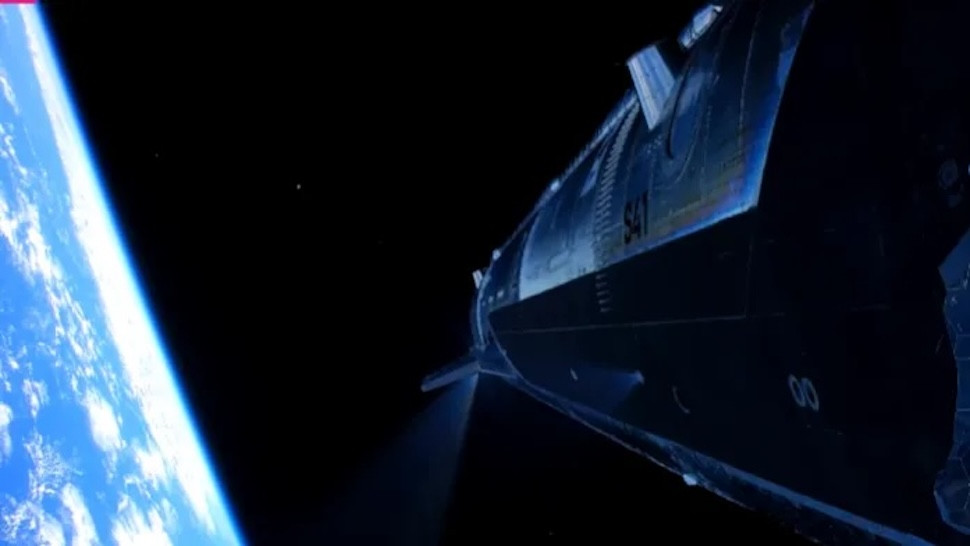
SpaceX, headed by Elon Musk, for the first time placed the Starship rocket into Earth orbit during its 14th test launch, according to Space. However, immediately after launch, Starship encountered a series of engine problems.
The rocket lifted off from the Starbase launch site in Texas (USA) today, September 28, at 15:49 Minsk time. The stages separated, Super Heavy flipped and splashed down in the Gulf of Mexico.
However, there were off‑nominal situations. One of the Raptor 3 engines shut down prematurely, which could have jeopardized Starship’s orbital insertion — but that did not happen.
The rocket reached the required altitude, and payload separation began. In particular, the vehicle started deploying 26 Starlink V3 satellites, which are intended to form the basis of SpaceX’s next‑generation internet network.
According to the mission plan, Starship should complete up to six orbits around the planet, then de‑orbit and splash down in the Pacific Ocean off the coast of Chile. Thus the flight duration will be about ten hours.
Recall that Starship is a reusable super‑heavy launch system being developed by SpaceX to transport people and cargo to low Earth orbit, the Moon, and Mars. The system comprises a first stage — the powerful Super Heavy booster — and a second stage — the Starship spacecraft itself.