Menu
Excursion to Osipovichi OOO MIZ MEDBELROS: what they produce and what will appear in the near future
At the production site, and in any, it is best to visit repeatedly to see the dynamics of change. They show the presence of concrete plans and visible steps in their implementation, giving an understanding of prospects. We became acquainted with the current product line and what new items will appear soon during a visit to LLC “MIZ MEDBELROS”.
The enterprise is already 27 years old, of which 15 years of production have been operating in Osipovichi. Currently more than fifty people work here. The medical instruments produced by the company are widely used in laboratories, operating rooms, and beyond.
And some samples – apparently the ones around which thoughts revolve at this stage – could be seen on the director’s desk, Oleg Levchik. For example, scalpels. One of the latest innovations is replacing their paper packaging with blister packs. The process is currently being fine‑tuned.
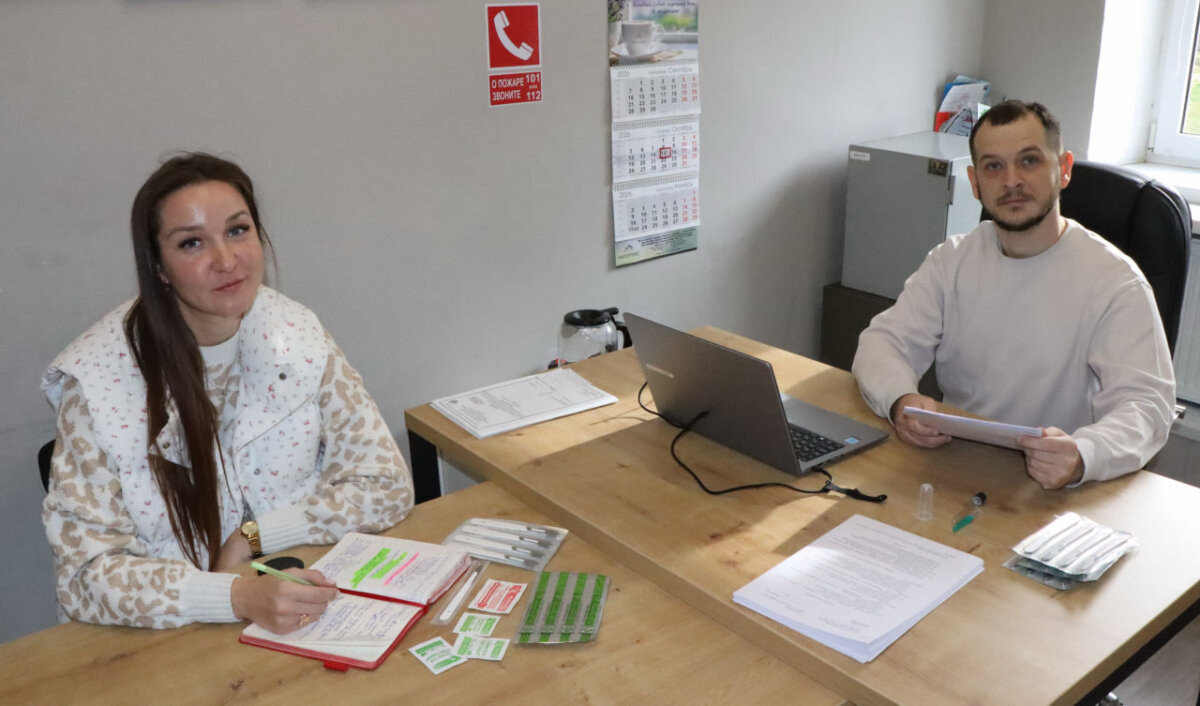 — Scalpels are very sharp instruments, and sterility is an important condition for them. To guarantee that the packaging will not be damaged under any transport, we decided to switch to blister packs, says Oleg Igorevich. “It is, of course, more expensive, but also more reliable. I consulted with surgeons beforehand to understand how convenient and feasible the innovation would be. Practice is only ahead.”
There are several types of sterilization. For scalpels, ethylene oxide is used. Finished products are sent for sterilization to partners – the Borisov plant “Frebor”.
Also currently on the list of produced items are scarifiers with side and central spikes, special lancets that make gentle scratches on the skin for prick tests for allergic reactions.
The production of all kinds of wipes has long been mastered here. Medical wipes – sterile for wound care, alcohol‑based for disinfecting skin and medical instruments. There are wipes for stimulating breathing and bringing people out of fainting. They are soaked in a 10 % ammonia solution, which is convenient and practical: there’s no need to open the ampoule and then dispose of its contents. Among the products already appreciated by consumers is a hemostatic wipe, soaked in a 5 % solution of aminocaproic acid, which can stop capillary bleeding. There are also wet hygienic antibacterial hand wipes used at home, with chamomile, thyme, and others, packaged in 20‑ and 72‑count packs – in short, for any request. Such goods can easily be found on the shelves of chain stores and gas stations across almost the entire country.
Vacuum tubes, whose technology does not lag behind foreign counterparts, form the core component of the system for venous blood collection. The tubes already contain all reagents and additives required for the analysis. The vacuum ensures the necessary volume of material and, accordingly, guarantees the correct ratio of blood to reagent. The tubes are made from polyethylene terephthalate – a plastic that is exceptionally strong and effectively prevents gas exchange – says production manager Darya Androsik. “And the new idea is to develop tubes for drawing blood from newborns: for such infants, the material is taken by a non‑vacuum method.” She also plans a stand for the tubes. Another concept is to develop a special gel for tubes that, after centrifugation, will act as a layer between the serum and the remaining fraction, easing the work of lab technicians, improving convenience and accuracy of analyses. By the way, such a gel is not yet produced in our country. Reagents are planned to be purchased from Russia, China, Belarus, and mixing will already take place at the plant.
And if some ideas are still at the impulse stage, the clearly defined near‑term prospect is to start sharpening medical needles ourselves. And, by the way, Medbelros also plans to be the first in Belarus to do so. The equipment – a whole set – is already on site in the workshop.
The necessary equipment was acquired in China, and specialists from the same country came to set up the operation of the machines. It would seem that there's nothing special about sharpening a needle - the process appears simple at first glance, but in reality, it involves a whole series of stages. The starting material - thin, hollow metal tubes - is purchased in China, then cut to the required length, sanded with sand to remove micro-burrs, followed by gluing the blanks into strips for ease of sharpening, cutting these strips, sharpening the needles on both sides, then grinding (mechanical processing using abrasive materials), washing under high pressure, and drying. And all of this is done on separate equipment.
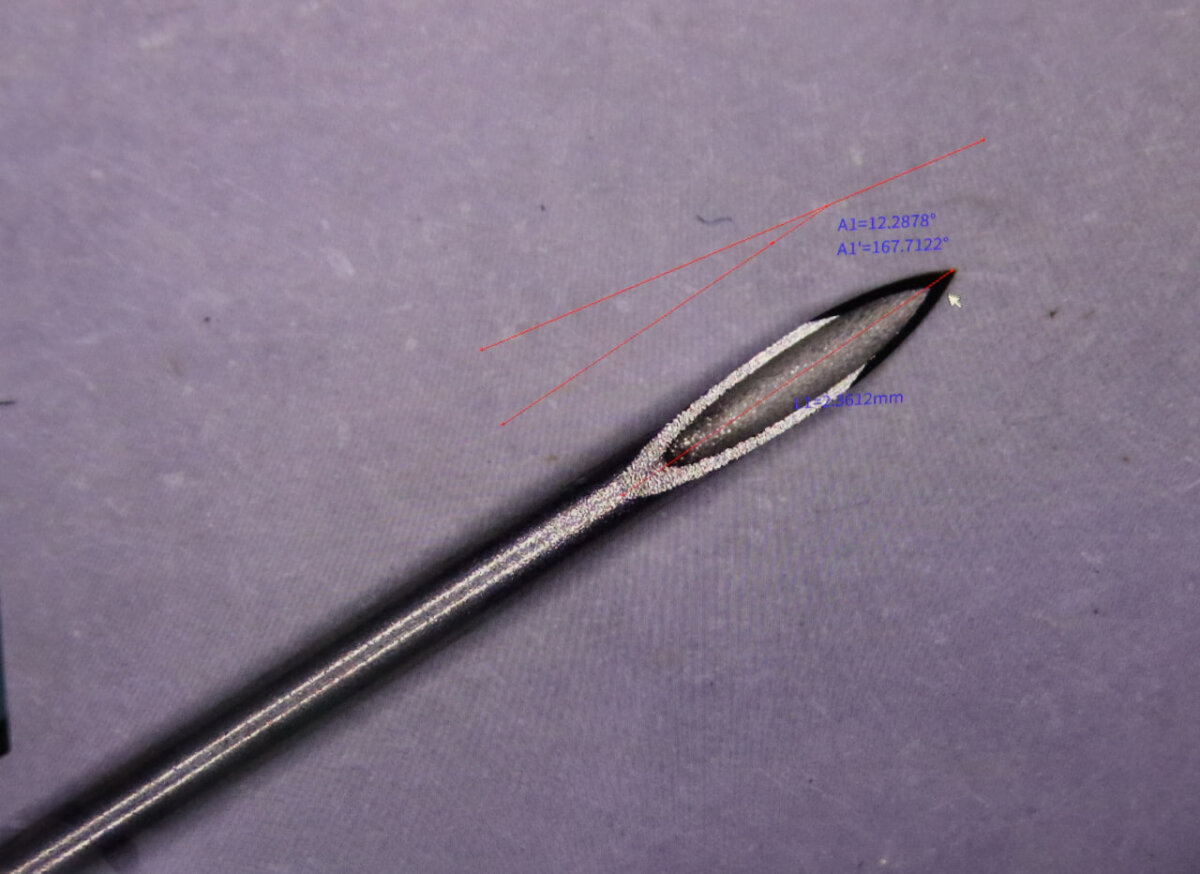
At the quality control department, special electronic microscopes are used to measure the sharpening angles of the needle. The end that will pierce the skin is sharpened at three angles, similar to a spear, to ensure easy and minimally traumatic penetration into tissues. Here, a test measurement of the piercing force is also carried out on a special material with a density similar to that of skin. These studies are conducted by the head of the department, Kirill Kazachenok. A keen eye is good, but it's better if the correctness of the work is confirmed by electronic technology. This will help accurately identify and eliminate shortcomings.
I consider our production not only in demand but also interesting, says Oleg Levchik. Although there are many complexities before launching a new product, it's worth it! That's why we're constantly searching. The head of state has repeatedly spoken about the importance of localizing production for Belarus. Our enterprise is doing just that - increasing the localization of production. When a planned idea is implemented, that's the greatest incentive to move forward.