Menu
Do you know why it is important to observe crop rotation and which cover crops to sow in a bed where cucumbers grew?
The vegetable season is over — long live the new one! And it begins with planning. Adhering to crop rotation and intercropping rules will yield a plentiful and healthy harvest.
Thus, it is not recommended to grow the same crop in the same spot for several consecutive years. First, in such a case there is a high probability of depleting the soil, because year after year the plants will take from it the same nutrients that suit them. As a result, the yield of the monoculture will also decrease on the impoverished soil. Moreover, you will “help” pathogens of certain diseases to accumulate in the plot. Additionally, the roots of many plants release toxins to which the members of their own families are most sensitive — if you plant vegetables in the same place for several years in a row, each subsequent harvest will be worse than the previous one.
Proper crop rotation mitigates all these negative effects, revitalizing the soil and allowing resources to be used more rationally.
Planting any, as diverse as possible, crops one after another is not an option: they may have completely different requirements for soil composition, microclimate, and light conditions. Moreover, all plants have different needs for the amount of nutrients they require. For example, it would be a bad idea to alternate pumpkins with cabbage or potatoes on a bed — all of them are active consumers of micronutrients.
A proper crop rotation looks like this: in the first year on the bed we grow the most “voracious” crop, in the following years we plant crops with lower nutrient demands, and in the 4th–5th year we add fertilizers and plant again a crop from the first group.
Any beds need periodic “rest”, so from time to time they should be left fallow (covered with a tarp).
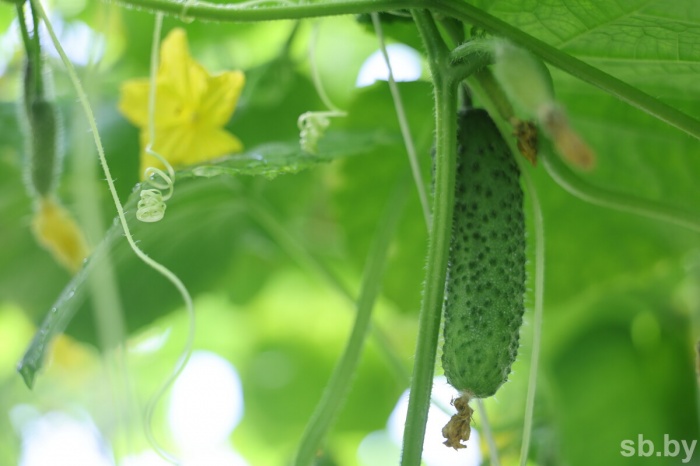
Cucumber belongs to those “voracious”
After cucumbers, you can sow leguminous crops such as peas, beans, and beans; cruciferous crops such as mustard, rapeseed, radish, etc.
Another excellent option is to plant greens—onions, garlic, dill, and other aromatic herbs—in the place where cucumbers were grown. You can also plant potatoes after cucumbers. Such a predecessor will not cause any significant harm, but don't forget about proper fertilization of the “second bread”—cucumbers still take a lot of nutrients from the soil.