Menu
Chronicle of the revival of the Lida brewery
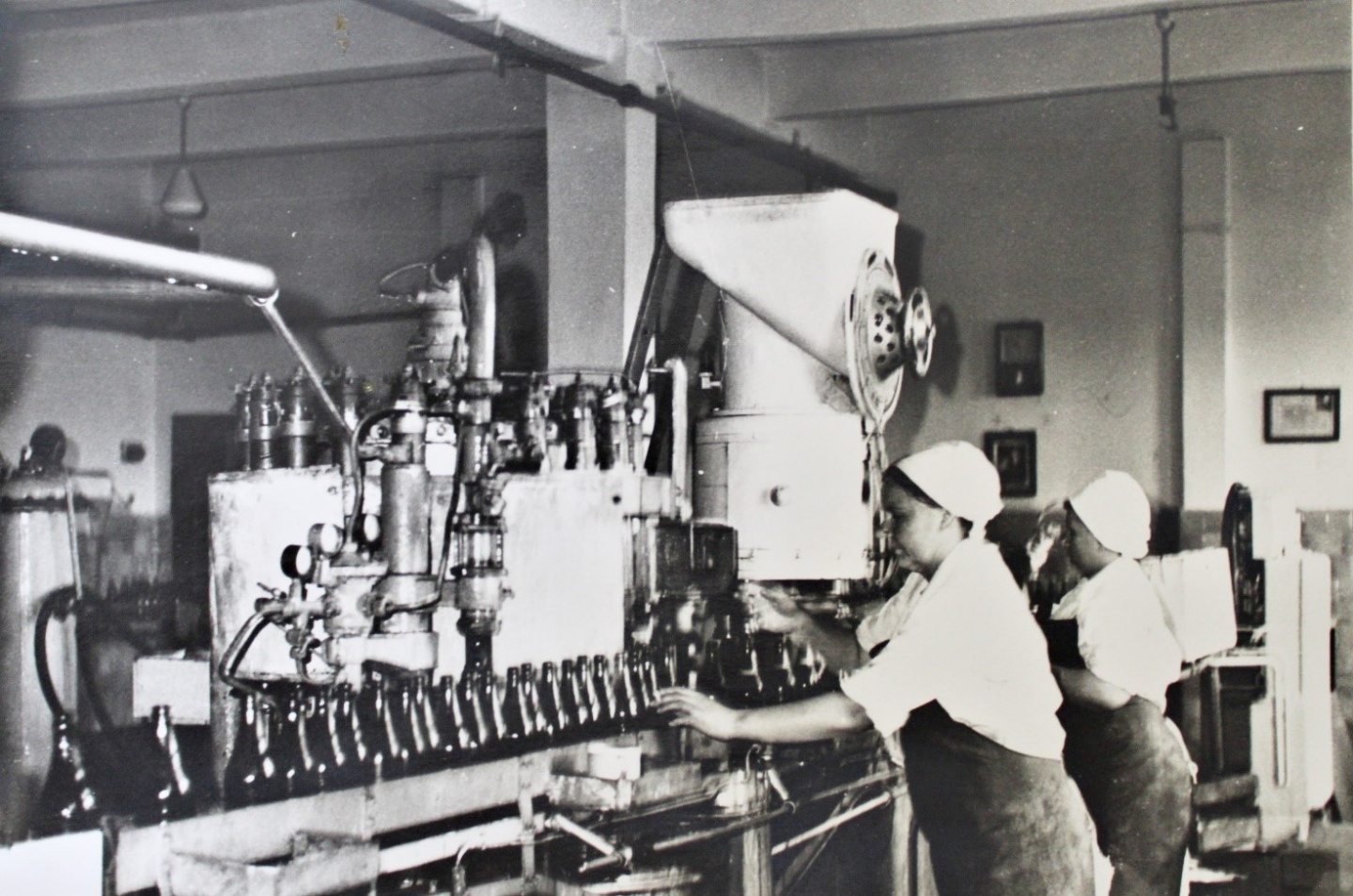
Studying archival documents of the Lidka Brewery from July 1944 to 1955, we gain a unique possibility to see how, starting from the state of total destruction brought by the Great Patriotic War, new production emerged. This story is not only about beer and lye, but also about the human spirit, engineering thinking, and the daily heroism of Belarusian workers in the first post-war decade.
1968 Year
1944: Anatomy of Destruction and the First Breath of Life
Summer 1944. Belarus was forced out of German-Fascist occupation. On July 18, 1944, there came the date that marked the beginning of a new life for the Lidka Pivotnaya. In the explanatory note to the 1944 annual report, the state of the factory was characterized by one word — "chaotic." "The entire territory of the factory and buildings were marked and cluttered," notes the chief accountant Dzesha. The warehouses that formed the basis of any production were destroyed. There was neither flour nor salt nor any transport barrels. It seemed that the enterprise had ceased to exist as a production entity. However, archival records testify that even in this chaos there remained traces of former productive strength. The only "capital" of the factory consisted of reserves remaining in the cellars: brew, about 5 tons of coke gas, 2.5 tons of hops, and more than 120,000 clay bottles. These very remnants became salvageable. The task of reorganization was to clear the territory and establish order within the buildings. Even in the first weeks after liberation, the factory began approaching the beer bottling stage via a military unit passing through Lidka. This was a harsh necessity and a question of survival for the enterprise.
Real production became possible only in March 1944, when the first batch of beer arrived from the Grodno Pivotnaya — about 9 tons. That date deserves special attention as a milestone marking industrial recovery. On April 4, the factory boiled its first post-occupation beer batch. However, problems with raw materials did not disappear: wheat arriving in April from small state farms was of "very poor quality." Nevertheless, on August 6, the enterprise opened its first malting facility to produce its own barley.
It is characteristic that in 1944 the factory represented a multi-building complex. Besides the brewing building, there were a wood-pulp and lye building. However, the latter almost did not work due to lack of ingredients and materials. The wood-pulp building also suffered from a shortage of timber. By then, the energy capacities of the enterprise could not load all buildings simultaneously.
The 1950s became a period of territorial growth and long‑term recognition for the Lida Brewery. In April 1951, by decision of the city council, the plant was allocated a land plot of 9,235 square meters on Sovietskaya Street for the construction of new production facilities. And in November 1954 an additional 0.6 hectares were added for the non‑alcoholic beverages workshop, expansion of the garage and the mechanical workshop.
Success brought recognition at the republican level. In the first quarter of 1951, the team of the salad workshop under the leadership of Comrade Maya I.P. was recognized as the winner in socialist competition and awarded the title 'Brigade of High Quality of the Ministry of Food Industry of the BSSR'.
Considerable attention was given to staff training. In 1951, 25 people were trained in new professions: brewers, coopers, maltsters, operators of refrigeration installations, salad makers, barrel makers, filters. The brewery, under central management, trained its own specialists.
1953–1954: Rationalizers and Social Guarantees
The mid‑1950s were a time when the focus shifted from mere survival to improving working conditions and optimizing processes. A quality check in February 1953 established that the beer met the state standard.
Of particular interest is the 'Collective Agreement'