Menu
Choosing a good smartphone for 1500 rubles
What kind of smartphone can you buy today for roughly one and a half thousand rubles? That is the question we address in the material below, with examples, pointing out the pros and the contentious points of popular devices. It must be acknowledged that the memory crisis and the subsequent price increase affect not only top‑tier solutions but also lower‑class devices. A few years ago, for a similar amount you could find a “near‑flagship” with relatively few compromises. Today, the discussion is more about solid mid‑range models.
What will be discussed
Xiaomi Redmi Note 17 Pro Max
Samsung Galaxy A57
Poco X8 Pro
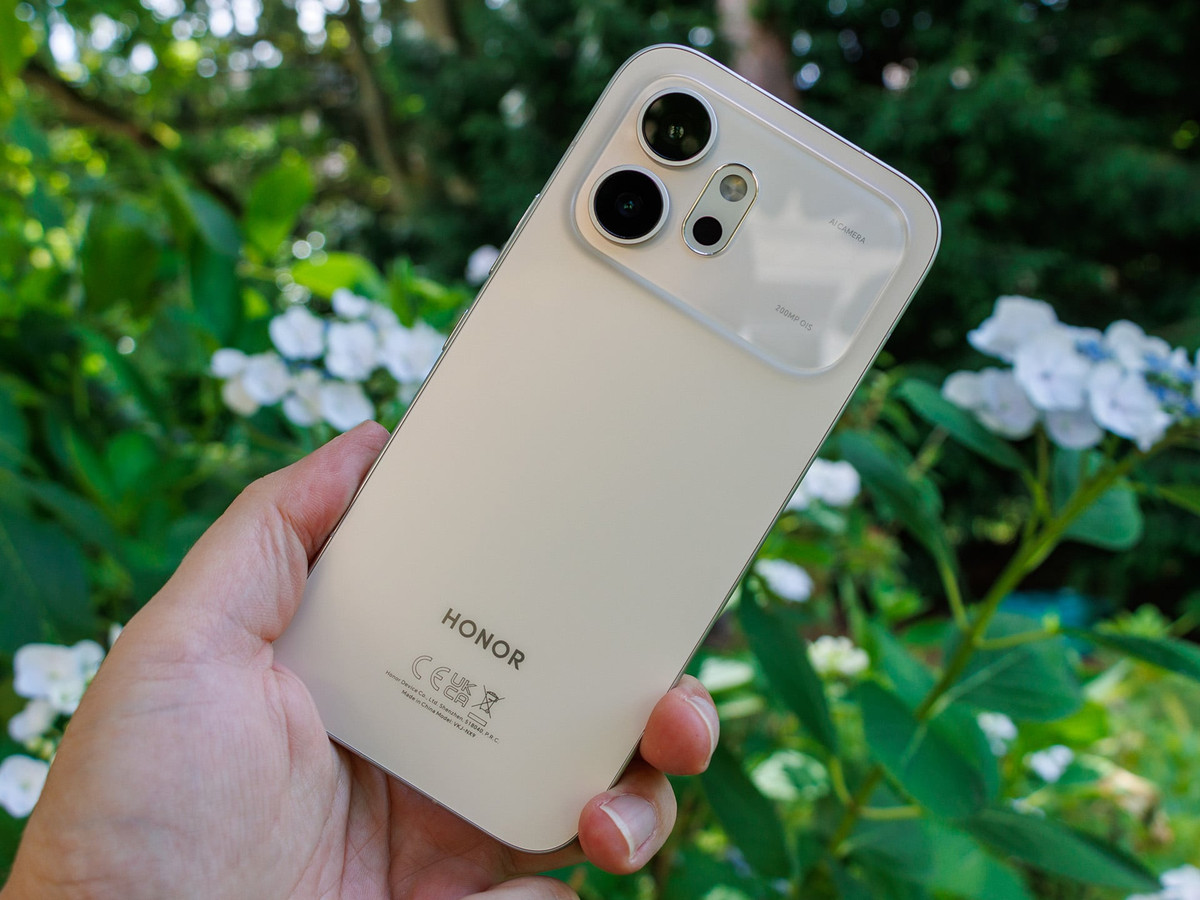
Honor 600
Realme 16 Pro
Huawei nova 16s
Honor Turbo
Nothing Phone (4a)
OnePlus Nord 6
This article was previously published on Onlíner — we have now updated it with new data. The selection of good smartphones for 1500 rubles has become even more relevant.
Important. All the smartphones discussed are new, from 2026. At the time of publication, depending on memory configuration/color, they are actually offered for the stated amount plus or minus a few dozen rubles. Devices outside those boundaries were not considered.
Which models to pay attention to
Based on popularity in the Catalog, the four devices below are chosen fairly often. And if you think about it, there's a reason: at least all of them are from well‑known manufacturers and continue popular lines of those companies.
Xiaomi Redmi Note 17 Pro Max
Essentially, the main distinguishing feature of this device is its 10,000 mAh battery. And that’s with a normal thickness chassis of 8.6 mm (weight 230 g). Such parameters owe thanks to silicon‑carbon batteries, gradually replacing the more familiar lithium‑ion variants.
The device also charges quickly with a 100‑watt charger: in our tests, from 6% to 100% it took 1 hour 12 minutes. In general, you can expect about 1 hour 20–30 minutes if the device starts from zero. Given the battery capacity, that’s more than a decent result. Two days of use on a moderately
In any case, the battery life here is quite remarkable. Nothing to say about the other parameters. They are mostly just normal: the display is large (6.83 inches) and bright, the main cameras (50 MP + 8 MP, “wide”) are not surprising. The performance is generally sufficient: calling the Snapdragon 6 Gen 5 chip “not powerful enough” would be incorrect. It covers all basic needs fully. The AnTuTu (v11) score is a million points.
But it’s worth noting that some smartphones in the selection are noticeably more powerful. That, in turn, makes them potentially more “long‑lasting” in terms of future‑proofing. On the other hand, the Note 17 Pro Max is water‑resistant at IP69K, which is pleasing. The latter refers to eSIM support.
Review of Xiaomi Redmi Note 17 Pro Max
Samsung Galaxy A57
Overall, the phone doesn’t have any particularly standout features, but it does have a set of noticeable advantages. For instance, the device received at least six major OS updates, supports eSIM cards, is water‑resistant at IP68, and also supports Samsung Pay (the company’s proprietary contactless payment system via the Wallet app).
Moreover, some users point out the custom skin – it has recently been updated to One UI 9, as on flagship devices. By default, the AI agent can be chosen not only as Gemini but also, for example, Perplexity.
Another point worth noting: the screen (6.7 inches) is solid, the main camera is formally triple (50 MP + 12 MP, “wide” + 5 MP, macro). Although the need for a third macro module is, frankly, debatable. The Exynos 1680 chip scores 1.3 million
In our opinion, one of the main advantages of this Poco - the brand, recall, belongs to Xiaomi - is its high performance. The Mediatek Dimensity 8500 Ultra chip paired with at least 8 GB of RAM delivers around 2.8 million points in the AnTuTu test. But even if we don't look at the ephemeral results in benchmarks, the X8 Pro handles the shell, applications, and games (at high settings) perfectly. The reserve for the future is substantial.
The screen is 6.59 inches - it's hard to call this model compact, but compared to other devices in the selection, it's relatively small. This may be a plus for some people. The IP69K protection is also a welcome feature.
There are almost no complaints about the main characteristics: the display is excellent, autonomy (6500 mAh, 100-watt charging, 40 minutes from 0 to 100%) is also good. The main camera, 50 MP, is on par with both daytime and evening shooting. There's also an 8 MP "wide-angle" camera, but there's no dedicated zoom module.
The contentious issues are in the details. For example, the X8 Pro does not support eSIM cards and is equipped with an optical, rather than a more accurate ultrasonic fingerprint scanner (unlike the X8 Pro Max). There's no wireless charging - but this applies to all other smartphones in the material.
The main parameters of the Honor 600 include a 6.57-inch screen (which can compete with the Poco in terms of "compactness"), and a Snapdragon 7 Gen 4 chip. In AnTuTu, it scores around 1.4 million points. Overall, this is quite enough, especially compared to the models described above. But, obviously, it's not a record (we recall the same Poco).
At the same time, the Honor 600 can have an eSIM card installed, and it has IP69K protection. The battery is also large, 6400 mAh. Formally, the charging is less powerful, 80-watt, but in fact, the phone is replenished in 45 minutes - an excellent result. As for the cameras, there are no questions, even for a mid-range device: 200 MP + 12 MP ("wide-angle").
The contentious issues are rather in the details. For example, the fingerprint scanner is optical, and there's no zoom camera (dedicated module) or wireless charging. But once again, we note that such features seem to be reserved for higher-class devices, so it's not worth scolding Honor for them too much.
Alternatives
The above options, judging by customer reviews and overall popularity in the catalog, are in demand. But there are also alternative options that may also be worth considering.
Realme 16 Pro
The device was released at the very beginning of the year, but it has not lost its relevance over time. In general, in terms of its main features and parameters, it largely repeats other mid-range devices, differing mainly in its shell.
The device offers a 6.78-inch screen with a refresh rate of up to 144 Hz. Although it is unlikely to exceed 120 Hz most of the time, it is still a good feature. It is also good that the phone is protected according to the IP69K standard, but it does not support eSIM, which is a bit disappointing.
The fingerprint scanner is optical and built into the screen. Formally, this could be a drawback, but based on the experience of other models, ultrasonic sensors are not yet being installed in devices priced around $500.
The camera has a resolution of 200 MP, and there is also an 8 MP wide-angle camera. The processor is the MediaTek Dimensity 7300, which scores around 1 million points in AnTuTu, which is roughly average for the market. It is also worth noting the 50 MP selfie camera and the 7000 mAh battery. The charging speed is 80 watts, which is not a problem.
Huawei nova 16s
This model is brand new, presented in September. Let's note right away that Google services on Huawei smartphones, including the nova 16s, will work, but you will have to set them up manually. In general, this does not cause any difficulties, but there is a formal restriction.
The manufacturer emphasizes the main camera, or rather, the cameras. In addition to the main 50 MP module, there is also a 50 MP telephoto lens for 3.3x optical zoom. Among the smartphones in this selection, only the nova 16s has a dedicated zoom module.
The 7000 mAh battery with 100-watt charging support is also noteworthy. The chip is proprietary, the Kirin 8020. The exact performance of the nova 16s was not measured at the time of publication, but it is likely to score around 1-1.1 million points in AnTuTu.
Controversial points include the fact that, if we do not take into account the need to manually add Google services, we can note the IP65 protection standard (less advanced than that of other devices in this selection), a virtual proximity sensor, and the lack of a wide-angle camera.
Honor Turbo
Another model, which has just gone on sale, was shown in August. One of its key features is the 8650 mAh battery. It's not a record, like the Redmi Note 17 Pro Max, but it's close.
We were unable to personally verify the autonomy, but it's almost certain that you can count on two days of work in a moderately active mode (GPS, LTE/5G). The charging speed, however, is 80 watts — it's a bit disappointing that it didn't reach 100 W, but it's not a crucial aspect.
In other respects, everything is quite familiar: the screen is 6.79 inches, the chip is Snapdragon 6 Gen 4. Overall, a more powerful chip would be desirable, but even now, with around a million points in AnTuTu, it's sufficient. The main camera features a 50-megapixel sensor, and there's also a 5-megapixel wide-angle lens. Will such a resolution be enough for high-quality photos? That's a question.
The fingerprint scanner is in-screen and optical — we've already discussed such models above. However, there's a lack of support for eSIM cards.
More exotic smartphones
If devices from the above brands seem too familiar, you can try to find something more unusual, something that stands out — two such models fit within the specified budget.
Nothing Phone (4a)
Perhaps this model is chosen primarily for its design and built-in customizable glowing glyphs. However, its drawbacks include the lack of eSIM, a mediocre wide-angle lens in the camera, and not the most impressive water resistance (IP64).
The package also doesn't include a charging device. Which, to be honest, seems strange — only a more well-known brand like Samsung can afford such a decision in the mid-range segment, and even they are criticized for it.
Key parameters: the screen is 6.78 inches, the chip is Snapdragon 7s Gen 4, and the battery is 5080 mAh. The main camera features two 50-megapixel modules, but the second one is not a traditional wide-angle lens, but a telephoto sensor with 3.5x optical zoom. This is a rarity in the mid-range segment, as mentioned earlier.
OnePlus Nord 6
This smartphone stands out not only with its brand but also with its powerful platform — Snapdragon 8s Gen 4. It scores 2.3 million points in AnTuTu, which is an excellent result for this segment.
The battery is also impressive, with a capacity of 7500 mAh — the device can likely last for one and a half to two days without needing to be recharged. Finally, it features a screen with a refresh rate of up to 165 Hz. However, again, the device doesn't work at such high frequencies in standard mode, although the fact itself is pleasant.
What are the downsides? The device kit may not include a charging adapter - which, as mentioned above, can be a deterrent. Unfortunately, eSIM is also not supported. On the bright side, the water protection is more than adequate, with an IP69K rating.