Menu
Beekeepers from the Osipovichi district: how the Remen family created a nomadic apiary
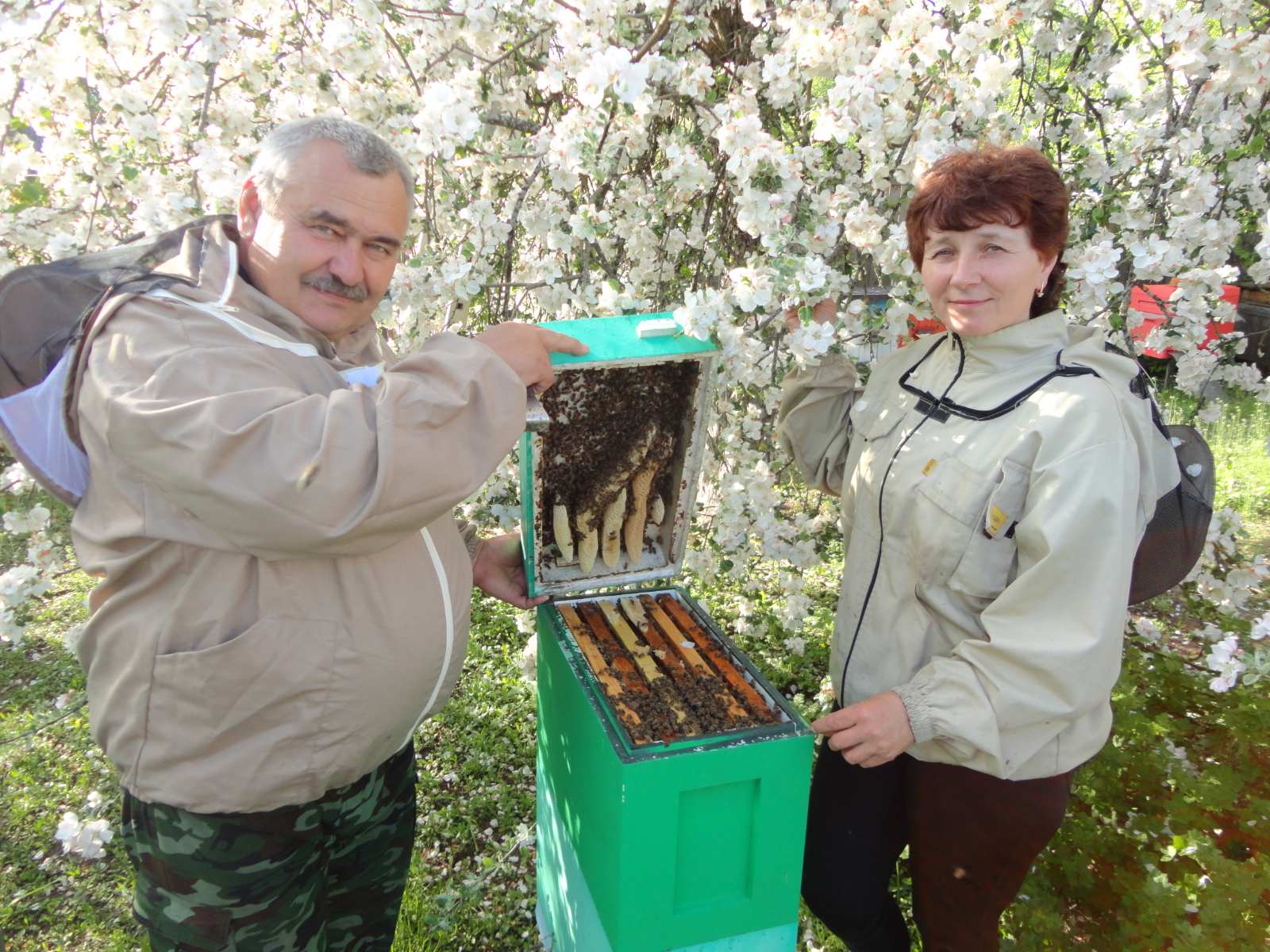
The nomadic apiary of the Remen family is not just a family business. It has been a passion for the soul for 37 years, thousands of kilometers of roads, hundreds of fields and hives, and a special life philosophy.
From the Grandfather's Hive
The story of the Remen family's nomadic apiary begins in the village of Karany, where Grandfather Leonid Fedorovich practiced beekeeping. From childhood the boy observed the amazing insects and learned to respect them.
The grandfathers passed away while Leonid was serving in the army. The apiary fell into neglect, leaving only empty hives. But they waited for their moment!
— In 1989, my wife Galina and I decided to take up beekeeping, — tells Leonid Remen. — We bought our first bee family in the village of Mezhno and settled it in the grandfather's hive. The following year we ordered two bee packages from the Baranovich breeding center. Step by step, with a book in hand
In our district there are only a few places where honey can be collected in commercial quantities. Therefore the main hives are kept on platforms and during the honey‑harvesting season they are moved to the Bobruysky, Starodorozhsky, and Pukhovichsky districts. One has to look for rapeseed, buckwheat, fescue fields, negotiate with agronomists and farmers, and arrange parking with forest administrations.
In fact, farmers are always happy to have such guests: bees increase the yield of agricultural crops by 20%.
— In the past every kolkhoz had its own apiary, — the beekeeper notes with sadness. — Unfortunately, that's no longer the case. But I look optimistically toward the future of beekeeping, because bees are not only about honey. They are about pollination, which determines yield, ecology, and health.
The off‑season does not forgive carelessness
Leontiy Fedorovich prepares for winter thoroughly, balancing care for the bees with preserving the quality of future honey.
One of the tricks of this period is timely feeding of sugar syrup with medicinal herbs added. The bees must process it and store it in the combs so that it can be used at the start of winter (such feed is more suitable in winter than some types of natural honey
Leonid and Galina also make creamed honey: they process honey in a creamer, which makes it airy and allows them to add propolis, pollen, or bee bread to it.
If you simply add propolis to honey, it will all float to the top: the products have different densities, explains Leonid Fedorovich. But in creamed honey, the additive is fully distributed. It's perfect for kids with tonsillitis.
The taste and quality of the apiary's products have repeatedly received high praise from juries and consumers - they are well-known and valued beyond their native region. The Remen family participates in tasting competitions every year, has diplomas, including the "Samy Smachny Med" award, and attends exhibitions, fairs, and festivals, as well as the "Closing of the Season" event at the National Academy of Sciences of Belarus.
A family business
The entire family works at the apiary. From generation to generation, not only skills are passed down, but also a love for nature and a shared passion for the work.
The owner himself is a builder by profession, but he has been working as a stoker for many years to have enough time for his beloved hobby. His children and grandchildren always lend a hand. His daughter Evgenia works as a teacher at the Yasenskaya school, and his son Alexei is also a builder. They grew up among the beehives and remember how their father taught them to understand bees from a young age. Now a new generation is growing up - four grandchildren.
Each of them has their own responsibilities, says Leonid Fedorovich warmly. They are drawn to this occupation themselves.
What the bee teaches
After 37 years of practical beekeeping, Leonid Remen has become convinced that bees do not tolerate fuss.
You need to work calmly, at a measured pace, with smoke, without haste, Leonid Fedorovich explains. I teach my grandchildren the same way: walk calmly, and the bee won't hurt you. The main thing is not to interfere with its return home. The bee has taught me calmness. And to approach everything more calmly. You need to love the bee.
Elena Suetta