Menu
Beauty should be accessible to everyone. A vintage shop Amfora-Antik has opened in Minsk
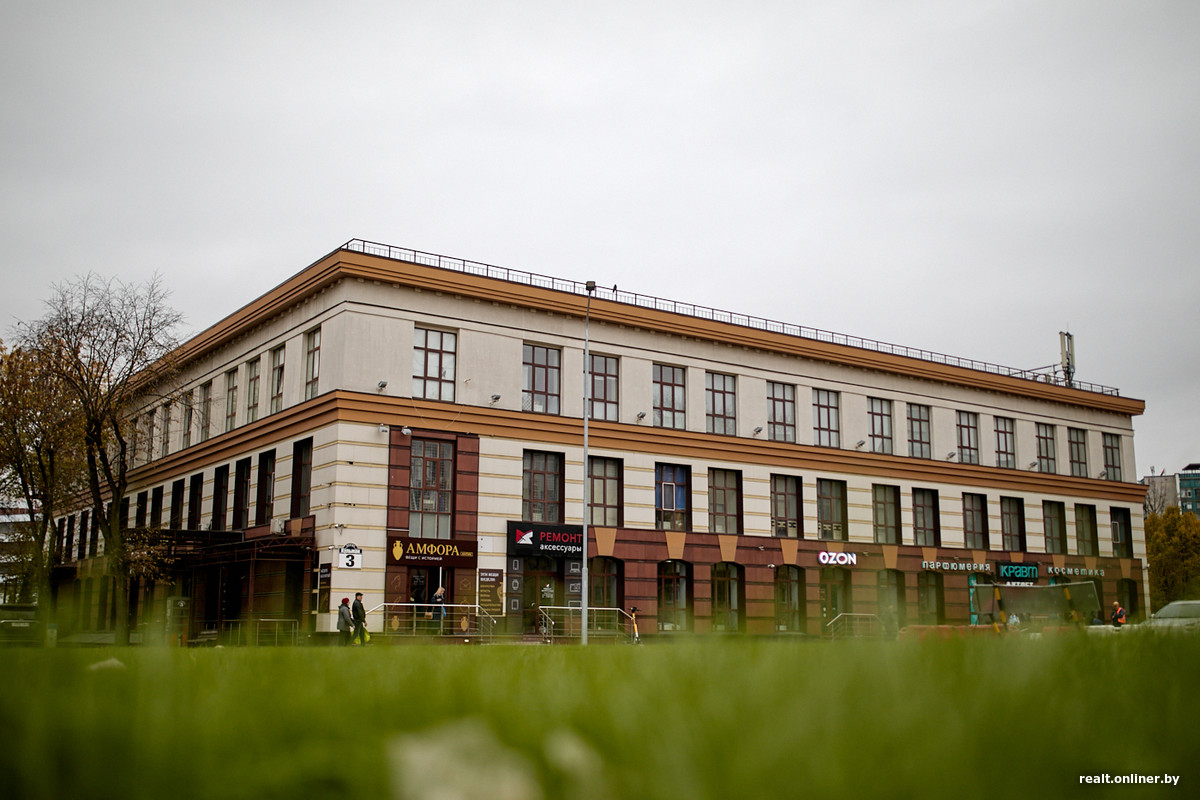
Lately, there has been a growing trend towards vintage items from everyday life: people are increasingly falling in love with old grandmotherly dressers and plates from last century's manufactures. In Minsk, there are already several vintage shops, and recently, another one has been added to them - it has opened on Kulyman Street, 3. The idea of the "Amphora-Antique" space belongs to Anastasia, who has been collecting historical items for 20 years and has finally decided to turn her passion into a lifelong endeavor.
The "Amphora-Antique" shop has opened near Komarovka and is easily recognizable by its stylized old-fashioned sign. Inside, you are greeted by Anastasia Komarovskaya, the shop's owner. The girl tells us:
- I am a candidate of philosophical sciences, an associate professor. Behind me, I have a university, a department, a leadership position, educational materials, articles of international level, lectures, exams, conferences. For over 20 years, I have been engaged in collecting antiques. At first, it was almost a secret pleasure: finding an old plate, a clock, a dresser with a history, discovering it, finding it, and bringing it home.
Then, restoration of antique furniture appeared in my life. And at that moment, I suddenly began to understand that things are not just about materiality. The more I was involved in restoration, the clearer it became to me that things are also a kind of text. A text that is written with various scratches, cracks, marks, signs of repair.
This rich life background is what prompted Anastasia to open the shop:
- The idea of the shop is not a business plan. It was born out of a question: why do we interrupt our connection with the past? Why do we love mass production so much in modern society? Why do we strive to move towards absolute grayness? Why do we stop appreciating everything that has already been created by humanity? We expend our efforts on producing the same things, and at the same time, new things do not become better than the previous ones. After all, old things are where real art lives - the art of porcelain, for example.
If we look at the plates of old German manufactures, we will see that each plate is a work of art, hand-painted, not stamped, something completely unique.
Moreover, my personal vintage collection is huge. In fact, for about five years now it no longer fits on the shelves available in my home. Even though I live in my own large house, there is no more space.
The shop itself is small, densely packed with exhibits—as is customary in vintage shops. In the center of the space sits a large antique table, behind which Anastasia plans to host meetings and give lectures on vintage.
How will the collection be replenished? At “Amfora-Antik,” people bring their own finds and hand them over on commission. And there is a lot of vintage in Belarus—it is kept in old houses, cabinets, once it was brought from abroad by someone's ancestors, and now it arrives from various countries.
— The furniture in the shop is mostly French, there is a Romanian table and even a Belarusian showcase from the 1970s. As for tableware, it is mainly represented by German porcelain and German crystal. You can also find Czech and Soviet glass, among others. And a huge variety of different types of porcelain—from the 1930s to the present day.
What about the prices? Anastasia responds:
— I believe that the prices in the store are very democratic. Beautiful things should be accessible to everyone. For example: a 1930s cup from the German manufacturer Hutschenroder, with the corresponding hallmark, costs 100 rubles. You can even find something for 20 rubles. The most expensive item is a buffet of French production from the turn of the 19th and 20th centuries. It costs 6,500 rubles.
The Amfora-Antik store is open from Tuesday to Sunday from 10:00 to 19:00. Soon, lectures on vintage items will be organized here.