Menu
B2B lead generation and how it differs from mailing to a database
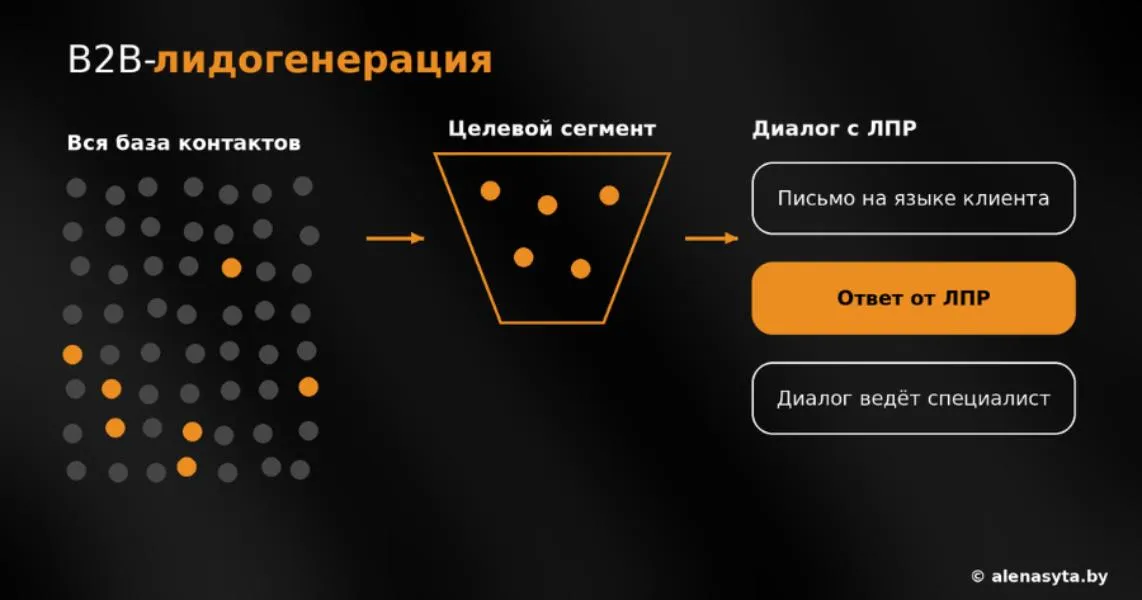
B2B lead generation starts with a dialogue with the right person
Sooner or later any company that sells to other companies faces one question: where to get new customers when acquaintances and word‑of‑mouth run out. One answer is B2B lead generation. But this term often means completely different things: from a purchased database with addresses to a well‑thought‑out system for finding and qualifying customers. We figure out the difference and explain how not to waste the budget. Alyona Sytaya, an expert in B2B marketing and lead generation, shares her experience.
In short, lead generation is not a one‑off mailing, but a system that the contractor builds to the client’s task. This format is what lead‑generation services offer companies: from market research to handing interested contacts over to the sales department.
What is B2B lead generation
A B2B lead is not just any contact from a table. It is a representative of a company that fits the client’s profile, understands what the discussion is about, and is ready to talk. Lead generation is the process in which such contacts are found, attracted, and passed to the sales department. The result is measured not by the number of emails sent, but by the number of meaningful dialogues
First, they conduct market research and segmentation: they determine who and what to offer, in which countries and industries they are looking for customers. Then they prepare messages taking into account what is important specifically for this audience and what language to use when speaking with them. After that, they launch contacts and follow‑ups at a reasonable pace. Next comes working with responses and evaluating leads: who is ready to talk now, who later, and to whom the offer does not fit. Finally, they analyze the results and adjust the segment and the texts.
Contractors differ in how many of these stages they take on. Some only handle the sending, while others manage the project end‑to‑end: from research and copywriting to working with responses, leaving sales to the client’s team.
Where automation works and where a person is needed
Automation and AI handle routine tasks well: they help study the market, segment the audience, prepare message variants, send emails, and remind those who haven’t replied. But as soon as the recipient responds, the automatic chain should stop, and from then on a person takes over the conversation. In B2B, the interlocutor expects live interaction when discussing terms and delivery.
This approach is used by Alyona Sytaya: automation takes care of preparation and sending, while a specialist handles the correspondence with interested contacts. The work is done in five languages and across the markets of Europe, the Middle East, and Africa. This
Before signing a contract, ask the contractor a few questions.
- How is the list of companies formed and where do the contacts come from?
- Who writes the messages and is the audience's language taken into account?
- What happens after the recipient responds?
- How are leads evaluated and what exactly does your sales department receive?
- What reports will you see and how often?
If there are no clear answers to these questions, you are likely being offered a regular mailing, not lead generation.
Where should companies start
B2B lead generation is not just a set of emails, but a managed system: a clear customer profile, messages tailored to segments, sensible automation, and live communication with those who respond. It is worth starting with three steps: describe the ideal customer, test demand on a small sample, and only then scale. Alena Sytaya has been engaged in B2B marketing for over 15 years: she builds marketing and sales for B2B companies entering international markets, from strategy to the first