Menu
Attention: main pipeline transport!
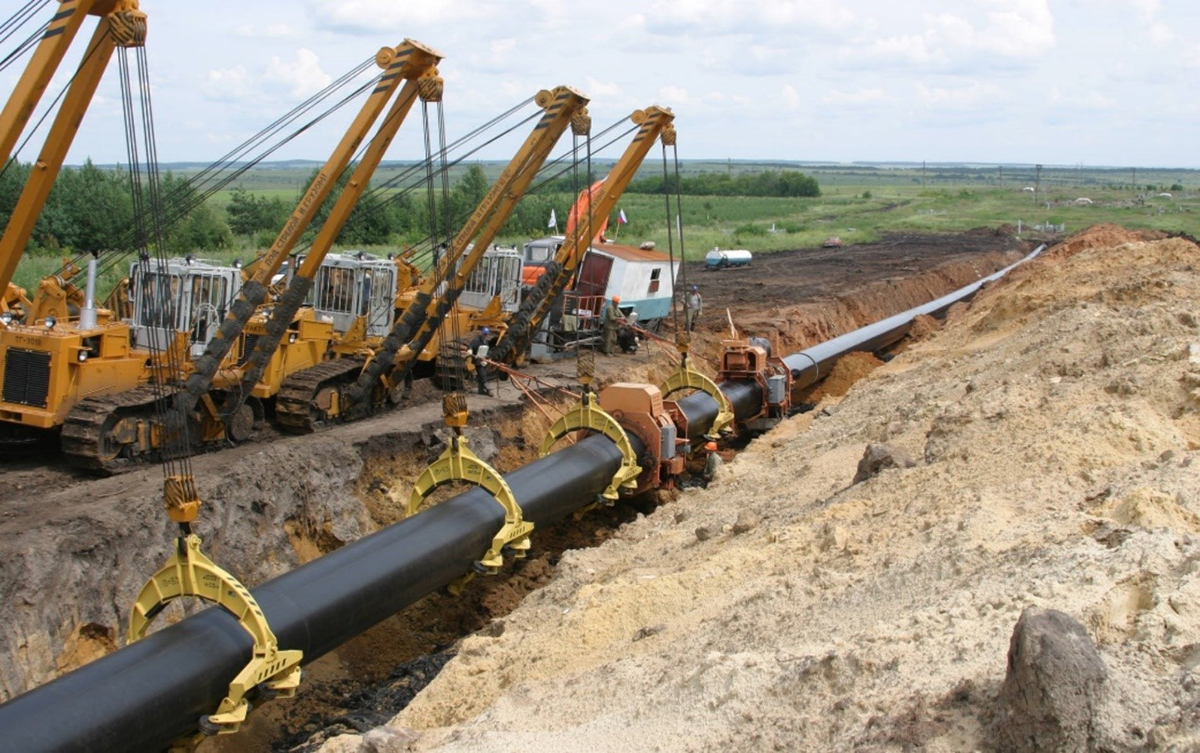
For most people, the term "pipeline" is associated with water supply and gas supply systems, through which water and domestic gas are delivered to residential buildings. However, besides the well-known pipelines, there are pipelines designed for transporting crude oil, petroleum products, and gas – mainline pipeline transport. They are usually hidden underground or underwater.
Transporting oil, petroleum products, and gas by road, rail, or water over long distances involves certain risk and significant material costs. Mainline pipelines simplify the transportation of raw materials from the places of extraction to the end consumers.
In order to ensure industrial and ecological safety on major pipelines designed for transporting liquid or gaseous hydrocarbons, in accordance with the Regulation on the Procedure for Establishing Safety Zones of Major Pipelines (approved by Presidential Decree No. 800 of the Council of Ministers of the Republic of Belarus dated November 21, 2022), the operator establishes a safety zone with respect to:
- a major pipeline transporting products on a land plot located between parallel planes, at a distance of at least 50 meters from each side of the pipeline axis;
- two or more pipelines transporting products, laid in the same technical corridor — on a land plot located between parallel planes, at a distance of at least 50 meters from each side of the extreme pipeline axis with each side of the technical corridor;
- a submarine crossing of major pipelines — on the water space section from the water surface to the bottom, located between parallel planes, at a distance of at least 100 meters from the axes of the extreme pipelines with each side;
- pump (compressor) station, compressor station, gas distribution station, gas metering station, gas cooling station, intermediate oil product transfer station, reservoir park of major pipeline objects, measurement node of liquid and gaseous hydrocarbons, acceptance and delivery points of liquid hydrocarbons, oil preheating points, loading or discharge terrace, site with a compressor station at the object of underground storage of gaseous hydrocarbons — on the land plot bounded by a closed line, at a distance of at least 100 meters from the boundary of the corresponding object in all directions;
- condensate storage facilities and earthen sheds for emergency liquid hydrocarbon release — on the land plot bounded by a closed line, at a distance of at least 50 meters from the boundary of the corresponding object in all directions.
The size of the safety zones, the name of the major pipeline, the attachment point (kilometer marker) to the route, telephone numbers and the address of the dispatcher service of the operator operating that pipeline segment are specified on an informational table placed at identifying posts.
Identification markers 1.5–2 meters high with an information plate are installed by the operator on the axis of the main pipeline:
- on straight sections of the route within visibility, but not less frequently than every 500 meters;
- at bends of the main pipeline (three markers);
- at locations where the main pipeline crosses other above‑ground and underground utilities;
- at locations where the main pipeline passes over water obstacles, ravines, and channels;
- at locations where repair and restoration work is carried out;
- to mark locations of test pits, washouts, and emergences of the main pipeline.
On multi‑line main pipelines, each line must be marked.
At locations where the main pipeline crosses roads of all categories, according to the operator’s information, the road owner installs and operates road signs prohibiting the stopping of vehicles. Any work and activities in the protection zones of main pipelines are carried out in accordance with legislation on main pipeline transport.
In protection zones it is prohibited to:
- move, bury, damage identification and signal signs, control and measurement points, erect any buildings and structures not related to the main pipeline;
- enter the territory or open manholes, gates and doors of unattended booster stations of communication cable lines, block-boxes of telemetry systems, fittings of linear fittings nodes, radio relay stations, cathodic and drainage protection stations, linear and inspection wells and other linear devices, buildings and structures of main pipelines, open and close valves and gates, disconnect or connect power supply and telemetry means of main pipelines;
- arrange dumps, pour out solutions of acids, salts and alkalis;
- destroy bank reinforcement structures, water passage devices, earthworks and other structures (devices) protecting main pipelines from destruction, and the adjacent territory and surrounding area – from accidental spillage of transported product;
- drop anchors,