Menu
Attention: main pipeline transport!
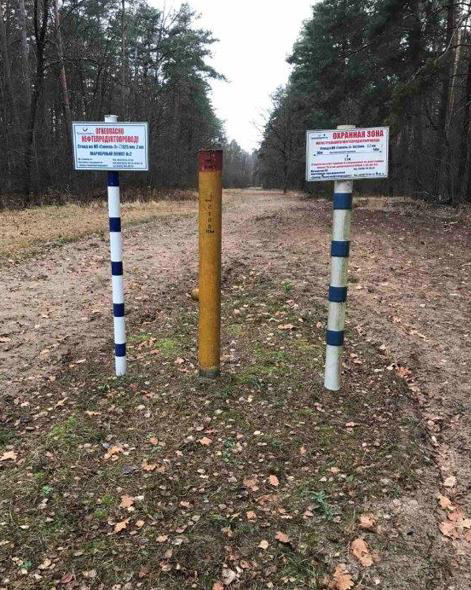
For most people, the concept of a "pipeline" is associated with water supply and gas supply systems, through which water and domestic gas are delivered to residential buildings. However, besides the well-known pipelines, there are pipelines intended for the transportation of crude oil, petroleum products, and gas – mainline pipeline transport. They are usually hidden underground or underwater.
Transporting oil, petroleum products, and gas by road, rail, or water transport over long distances involves certain risks and high material costs. Mainline pipelines simplify the transportation of raw materials from their extraction sites to end consumers.
In order to ensure industrial and environmental safety on main pipelines intended for the transportation of liquid or gaseous hydrocarbons, in accordance with the Regulation on the procedure
Identification poles 1.5–2 meters high with an information plate are installed by the operator on the axis of the main pipeline:
- on straight sections of the route within line of sight, but not less frequently than every 500 meters;
- at bends of the main pipeline (three poles);
- at locations where the main pipeline crosses other above-ground and underground utilities;
- at locations where the main pipeline crosses water obstacles, ravines, channels;
- at locations of repair and restoration work;
- to mark locations of test pits, washouts, and emergences of the main pipeline.
On multi-line main pipelines, each line must be marked.
At locations where the main pipeline crosses roads of all categories, according to the operator's information, the road owner installs and operates road signs prohibiting vehicle stopping.
Any work and activities in the protection zones of main pipelines are carried out in accordance with legislation on main pipeline transport.
In protected zones it is prohibited:
- moving, burying, damaging identification and signal signs, control and measurement points, erecting any buildings and structures not related to the main pipeline;
- entering the territory or opening manholes, gates and doors of unattended booster stations of communication cable lines, block-boxes of telemetry systems, fences of line hardware nodes, radio relay stations, cathodic and drainage protection stations, line and inspection wells and other line devices, buildings and structures of main pipelines, opening and closing valves and gates, disconnecting or connecting power supply and telemetry means of main pipelines;
- arranging dumps, pouring out solutions of acids, salts and alkalis;
- destroying bank reinforcement structures, water passage devices, earthworks and other structures (devices) protecting main pipelines from destruction, and the adjacent territory and surrounding area – from accidental spillage of the transported product;
- dropping anchors, passing with anchors dropped, chains, logs, drags and trawls, carrying out dredging and earth‑excavating works;
- lighting fires and placing open or closed sources of fire;
- carrying out unauthorized excavations and earthworks, as well as performing actions that may disrupt the operation of main pipelines, means of technological communication and telemetry or lead to their damage;
- arranging recreation areas, tourist stops and camps, stops of public