Menu
Antopol wool‑spinning factory began sewing winter “clothing” for calves.
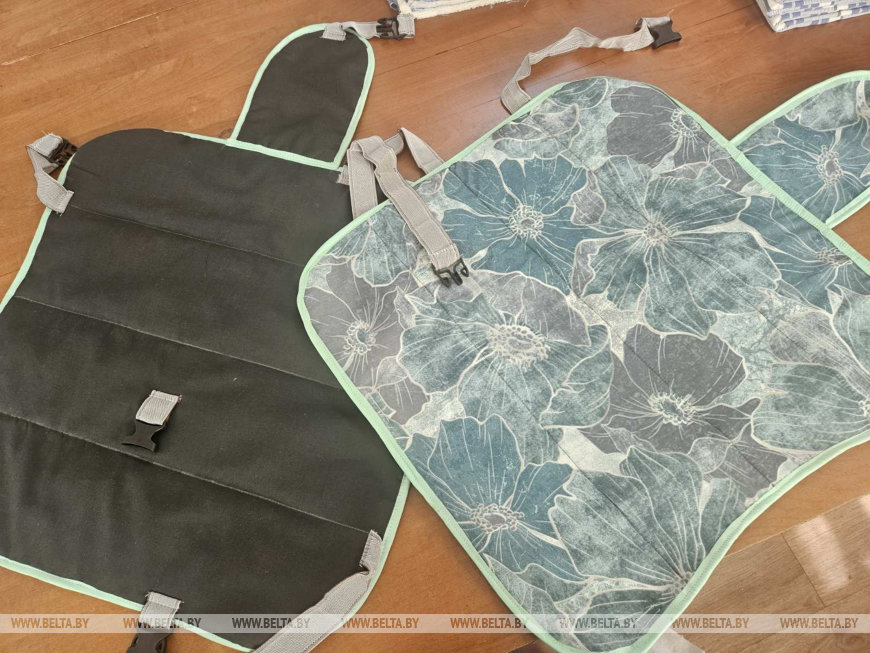
The Antopol cotton-spinning factory has started sewing winter “clothing” for calves, the enterprise reported.
The idea came to specialists after last winter’s anomalous frosts. At that time, the first batches of insulated blankets were sewn to keep calves warm. “Ahead of the next cold season, we understand that this is in demand, so we continued this work. We use our own insulation materials for sewing the blankets. We can use both needle-punched fabric and synthetic padding of various thicknesses. If temperatures are down to minus 5 degrees, it will be thinner; for stronger frosts, thicker,” the factory explained.
For the outer layer, a waterproof material is usually used, while the inner layer is sewn from cotton fabric. “We make it soft so it doesn’t irritate the calf’s skin and so it feels comfortable. We don’t use oilcloth materials that would make the animal sweat. For convenience, the blanket is made with special snap fasteners and straps to adjust the size,” the enterprise said.
The initiative was supported by the Committee on Agriculture and Food of the Brest Regional Executive Committee. The southwestern region learned a lesson from last winter. Not all agricultural facilities in the region were 100% prepared for extreme sub-zero temperatures. “Forecasts for winter vary widely. Some sources say it will be no milder than the previous one. We must not repeat our mistakes. One of the measures (not the main one, but an important one) in conditions of abnormally low temperatures is the production of blankets for calves,” noted the regional agriculture and food department.
Blankets are recommended for newborn calves to protect them from hypothermia. “A calf up to one month old does not have a developed thermoregulation center in its brain. It cannot regulate its body temperature, so hypothermia, like overheating, sets in very quickly. A small calf is highly dependent on the ambient temperature. A blanket helps it avoid expending extra energy on keeping itself warm. It allows the calf to grow and develop actively,” the specialists emphasized.
In the Brest region, serious measures are being taken to strengthen the material and technical base for keeping calves. In particular, this year plans call for the construction of 36 and reconstruction of 17 calf nurseries. It is planned that by 2027, the entire calf population in the region will be kept in modern conditions.
"We aim to build calf rearing facilities to automate all processes. They include a feed kitchen with all the necessary equipment. We intend to equip the facilities with milk pasteurizers, milk taxis, and equipment for automatic washing of utensils. In several farms, we are building advanced calf rearing facilities according to a custom design commissioned by the leadership of the Brest Regional Executive Committee," added the Committee on Agriculture and Food. Such approaches reduce manual labor. This allows specialists to focus more on caring for calves.