Menu
Acceptance commission for putting a facility into operation: composition and inspection procedure
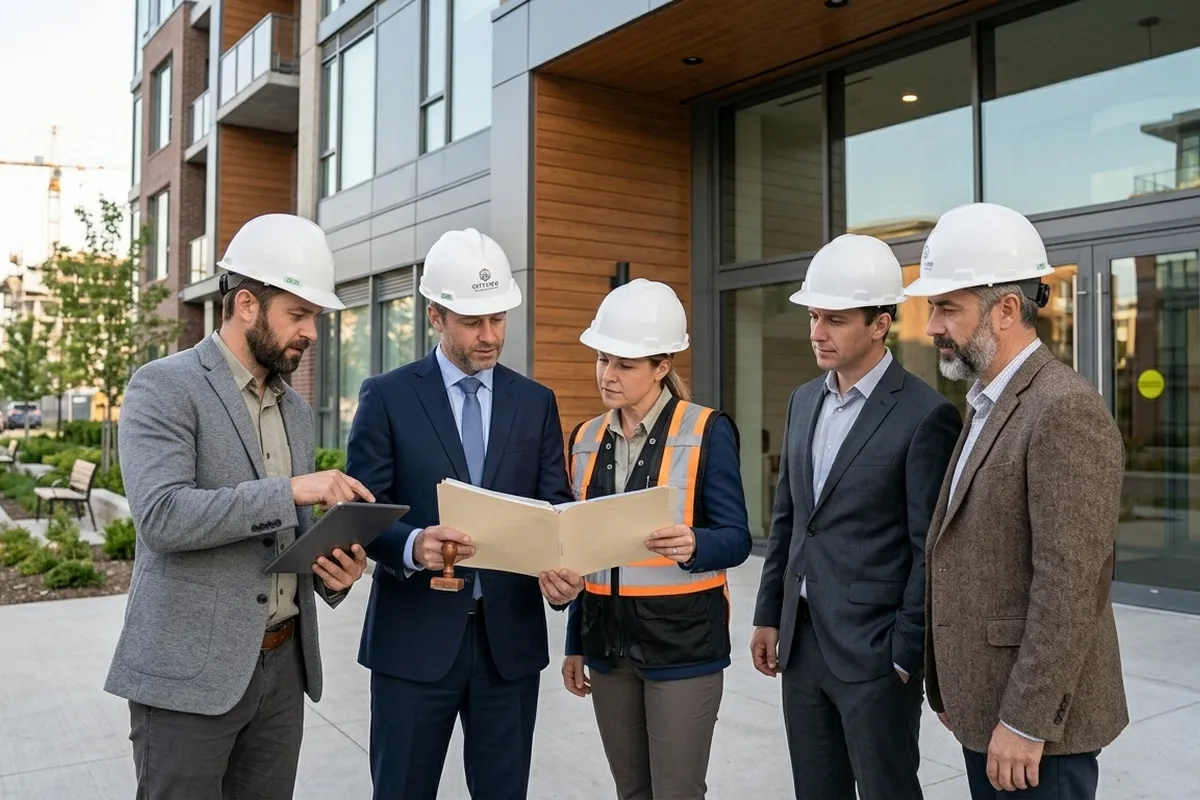
The acceptance commission determines whether a completed building object is suitable for its intended purpose and conforms to project and mandatory requirements. During inspection, the actual work performed, installed equipment, test results, and supporting documents confirming the object's readiness are evaluated.
The procedure for acceptance is established by Chapter 25 of the Code of the Republic of Belarus on architectural, urban planning and construction activities dated July 17, 2023 No. 289-Z. Special rules apply for certain categories of objects.
Starting June 24, 2026, the commission must also take into account changes introduced by a decree of the Ministry of Construction and Architecture dated June 12, 2026 No. 50 in decree No. 108 from October 8, 2025. These changes modified the list of documents required for acceptance.
Who belongs to the acceptance commission The commission's composition is formed taking into account legal requirements and the specific features of the particular object. Typically, it includes representatives of:
- the developer or customer;
- the contractor, if the works were carried out under a construction contract;
- the project documentation developer;
- the operating organization, if it has been defined;
- the local executive and management authority. If necessary, representatives of other state bodies and organizations may participate. Their inclusion in the approval committee is coordinated according to established procedures.
When the commission is appointed The commission is formed by the owner, developer, or an authorized organization. Its composition and chairperson are determined by an administrative document – an order, decree, or directive. According to point 4 of Article 106 of the Code, the decision to appoint the commission must be made no later than 30 days before the start of acceptance. For objects whose regulatory construction duration is less than 30 days, this period is shortened to 15 days. For a single-family residential house constructed using citizen funds, the commission is appointed by the local executive and management authority.
What the acceptance commission checks The main task of the commission is to determine the facility's readiness for operation. To this end, it checks not only the presence of documents, but also the conformity of the actual result with the design solutions and mandatory requirements.
In accordance with Article 107 of the Code, the commission evaluates:
- conformity of the facility and installed equipment with the approved design documentation;
- compliance with mandatory requirements of technical norms and rules during construction and installation works;
- achievement of the indicators envisaged by the project;
- carrying out the necessary tests and comprehensive testing of equipment;
- readiness of the facility for safe operation;
- availability of the conclusions and other documents required by legislation.
Moreover, the composition of the requirements to be checked depends on the purpose of the facility. In particular, occupational safety, fire and explosion safety, industrial sanitation, and environmental protection standards are taken into account.
Features of acceptance of industrial facilities For industrial facilities, the inspection includes additional issues. The commission takes into account the results of tests and comprehensive testing of equipment, the facility's readiness to produce products, compliance with safety requirements, and operating conditions.
If the technological process involves commissioning works, pilot-industrial operation, and product output, the results of comprehensive testing must be documented.
Documents and conclusions of state supervisory bodies are submitted to the commission in the cases and order established by legislation for the specific facility (Articles 111 and 113 of the Code).
What documents does the customer and contractor submit to the commission? As of June 24, 2026, the list of documents required for acceptance has been shortened. The changes are established by Decree No. 50, which amends Decree No. 108. The general contractor (contractor) submits:
- a set of working drawings signed by the persons responsible for the work, confirming that the work performed conforms to these drawings or to agreed changes;
- the warranty passport of the construction object. From the contractor's package, individual documents previously submitted to the commission have been removed, including material certificates, certificates of concealed works, work logs, and other materials. The customer's package has also become smaller. It retains, in particular, design documentation, documents for the land plot, expert conclusions and government agency conclusions required by legislation, certificates from operating organizations, and, for relevant facilities, a safety declaration and an operating-technical passport.
What to check before acceptance begins The reduction of the document list for the commission does not relieve the obligation to prepare construction and as-built documentation. The composition of materials submitted directly at acceptance has changed. Before the scheduled commission date, it is advisable for the customer and contractor to verify:
- the actual condition of the object corresponds to the design documentation;
- the working drawings bear the necessary markings and signatures;
- the warranty passport has been issued;
- mandatory tests and comprehensive trials have been conducted;
- the legally required conclusions have been obtained;
- the document package complies with the current version of Decree No. 108. Most importantly: the commission assesses the object's readiness not only on the basis of the submitted documents. Reducing the list of materials handed over to the commission does not exempt construction participants from preparing and retaining as-built documentation required by legislation.