Menu
A housewife turned homemade soda into a $2 billion business

Ellison went on a strict diet, somewhere she read about the benefits of apple cider vinegar and started drinking it every day. After a couple of weeks, her digestion had fully normalized, and skin inflammations began to fade. The only annoying detail was that drinking pure apple cider vinegar every day was an unbearable ordeal because of the burning throat acid and the sharp, distinctive smell of the product. Ellison realized she had to find a way to package its natural benefits into a pleasant form. She had to experiment with teas, fruits, juices, and soda right in her own kitchen in Dallas. The first taster was her husband Steven, who chose the flavor of raspberry and rose petals as the most successful. Friends and neighbors also liked the drink, and Ellison's father advised turning the accidental discovery into a commercial product.
Farmers' Market and Whole Foods
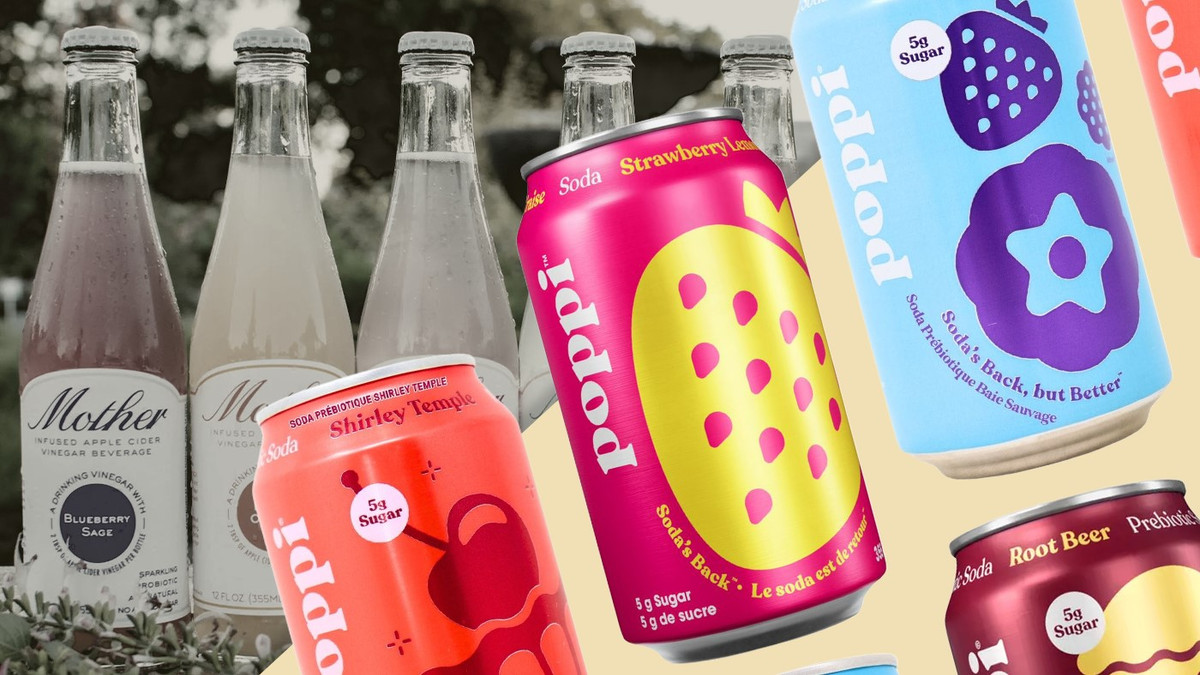
The Allsworth townhouse turned into a makeshift mini-factory. The couple bottled the first batches of the drink on a homemade bottling line. The entire living room was filled with buckets of ice, bottles, and rolls of labels. By the end of December 2015, the first batch was ready, and Ellison herself began selling at the local farmers' market. The brand was named Mother Beverage — in honor of the so‑called vinegar mother (the mother) — the useful cloudy sediment of living bacteria that forms during proper fermentation of natural vinegar. Three weeks later, a regional buyer from Whole Foods approached her stall and offered a contract. For American millennials, these trendy supermarkets were a symbol of conscious consumption, a place where they buy organic products and everything that promises health benefits. The retailer was eager to experiment with small local producers, and getting on its shelves was a recognition of success for the tiny brand.
"Then I first realized that our hobby was turning into a real business," Ellison recalled later.
Meanwhile, there was not enough money to launch serious sales. Ellsworth was at the beginning of her second trimester of pregnancy, the couple had just bought a house, but they decided to see it through. The girl finally quit her job at the oil company and raised $125,000 from friends and relatives to rent a production facility. The family also invested around $90,000 of their own money in the project. It got to the point where her husband Steven was forced to work as a waiter in the evenings to pay the mortgage, and Ellsworth sold her car and exhausted all her credit card limits. By the end of 2016, Mother Beverage was already being sold in about a dozen Whole Foods stores in Texas, and revenue had reached $500,000. However, growth stopped after that. The heavy glass bottles, the remaining specific vinegar taste, and the image of a health tonic for a narrow audience were hindering the company. The company needed a powerful boost from outside.
In 2018, Ellsworth decided to take a desperate step and applied to participate in the main American startup reality show Shark Tank. The format is simple: novice entrepreneurs come to several millionaire investors, so-called sharks, briefly present their project, and try to get funding in exchange for a share in the business right on the air. For Ellsworth, the filming took place in her ninth month of pregnancy. It took her enormous effort to convince the producers that the flight to California was safe for her health. In a pink dress and high heels, she told the sharks that the drink relieves fatigue and bloating, and promised sales of a million dollars a year.
The investors were skeptical.
Mark Cuban didn't like the sharp vinegar taste of the drink, Kevin O'Leary doubted the brand's viability in an oversaturated market, and the creator of Skinnygirl, Brittany Franks, called the startup's logistics scheme catastrophic. Only Rohan Oza, who had earned a reputation as the “godfather of brands” in the industry, saw potential in the project. He offered the Ellsworths $400,000 for 25% of their company. The stake was considered huge by early deal standards, but Oza's experience proved invaluable. During his audit it became clear that the name Mother Beverage could not be legally protected. The word “Mother” was too generic for the food industry, and the U.S. Patent Office denied exclusive rights to the trademark. This meant that
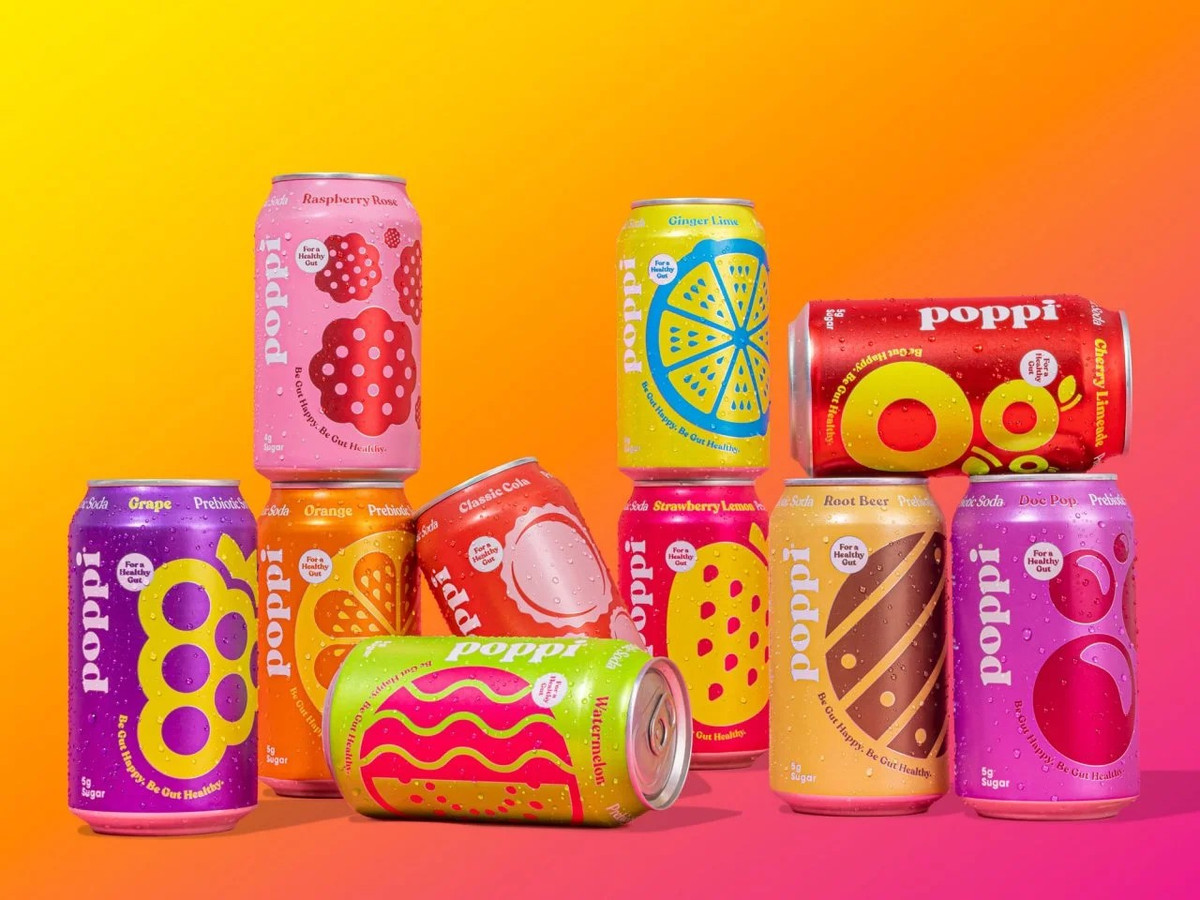
Heavy glass gave way to lightweight 355‑ml aluminum cans.
Designers bet on a striking pop‑art style with bright color blocks that stood out on any shelf.
The first four flavors released were strawberry‑lemon, orange, cherry lemonade, and raspberry‑rose—the very debut recipe from home experiments.
From a nutritional standpoint, the product looked flawless for the era of mindful consumption: each can contained only 25 kilocalories, no more than 5 grams of sugar, and 2 grams of prebiotic fiber based on inulin.
By comparison, a classic bottle of cola contains about 140 kilocalories and the 39 grams of sugar that frustrate dietitians.
Apple cider vinegar remained in Poppi, but its sharp taste was fully masked by juicy fruity notes.
New trend
By the early 2020s, the structure of the American beverage market began to change rapidly. Americans were
A pack of 12 Poppi cans cost consumers $25-30, while a similar volume of regular Coca-Cola cost around $10. Despite the high price tag, the category showed phenomenal growth. According to data from the analytical agency NielsenIQ, retail sales of prebiotic drinks in the US grew from a modest $33 million in 2022 to an impressive $777 million by January 2025. The bright neon cans of Poppi entered the national market at the right moment: when consumer demand had already entered a stage of explosive growth, but a clear single leader in the new niche had not yet been formed.
The pandemic and subsequent lockdowns paralyzed the traditional launch of Poppi in retail chains. To save the already produced stock, the team urgently redirected all products to Amazon warehouses. This forced crisis measure determined the further fate of the brand. Poppi's marketing became 100% digital from the very beginning.
In January 2021, Allison Ellsworth made her media breakthrough. On a regular Friday evening, sitting at home with a wet head after a shower and in her home pajamas, she recorded a simple one-minute video for TikTok. It didn't have professional lighting or complex editing. The girl just sincerely told the story of her pregnancy, health struggles, and appearance on the Shark Tank show. The effect was impressive. The sincere video instantly went viral, gathering over 17 million views. While the founders were sleeping, Poppi generated $100,000 in net revenue on Amazon.
This sudden success was consolidated by a clearly thought-out business strategy.
Instead of simply redirecting traffic to the marketplace, the Ellsworths built a smart digital funnel. Links from social networks led users to the brand's own website, where customers were offered a discount in exchange for a subscription. This way, the company collected a database of thousands of email addresses and phone numbers for SMS marketing. Only after that was the buyer redirected to Amazon via a special partner link, which allowed the brand to return part of the platform's commission.
Allison herself later pragmatically commented on her status as the face of the brand: "I did it not for fame or a career as a blogger. I went on the air because it brought the company money."
The money and zoomers
Having understood the rules of the new game, Poppi's management rebuilt the entire budget. About 20% of all marketing expenses began to go exclusively to TikTok. The company hired a staff community manager and launched a large-scale campaign to work with influencers. Jennifer Lopez was constantly caught by paparazzi with a bright can on set, and in 2022, it became known that Billie Eilish had officially included Poppi in her mandatory concert rider. A year later, Kylie Jenner and Hailey Bieber almost simultaneously, with a difference of a few days, published reviews of the prebiotic soda on their accounts, triggering a wave of imitation among millions of subscribers.
The result was not long in coming.
First, Poppi officially became the best-selling soda on Amazon, surpassing even the classic Coca-Cola in terms of sales share on the platform. With the end of the pandemic, Poppi's digital popularity triggered a tectonic shift in traditional physical retail as well. Consumers who were used to seeing bright cans in their feeds began to demand them on the shelves of supermarkets at home. The drink appeared in 36,000 outlets from more than 120 retailers, including Walmart, Target, and Costco. In 2023, revenue exceeded $100 million, and in 2024, according to the company, it exceeded the fantastic $500 million. In just four and a half years, the startup grew more than 38 times. If Whole Foods once received a cult reputation among millennials, then Poppi did the same among zoomers.
Competitors and the price of success
A real "war of prebiotics" unfolded on the American market. Poppi's main competitor, Olipop, started almost simultaneously with Poppi. By the beginning of 2025, Olipop was ahead of its competitor in physical distribution, occupying the shelves of 50,000 outlets.