Menu
539 stations, 909 kilometers, and billions of passengers: where in the world is the largest metro
TOP 10
539 stations, 909 kilometers, and billions of passengers: where is the largest metro in the world
Author: Igor Shubich. Photo: wikipedia.org, collage: Maksim Tarnalitsky
Which metro is the largest in the world? Let’s compare systems by the number of stations and see how the biggest underground networks on the planet are organized. The list includes New York and Paris, as well as the massive Chinese networks of Shanghai, Beijing, and Shenzhen. Some lines go deeper than 100 meters underground, some trains run right through residential districts, and certain stations handle as many passengers in a day as the population of some countries.
Top largest metros in the world (by number of stations) in 2026
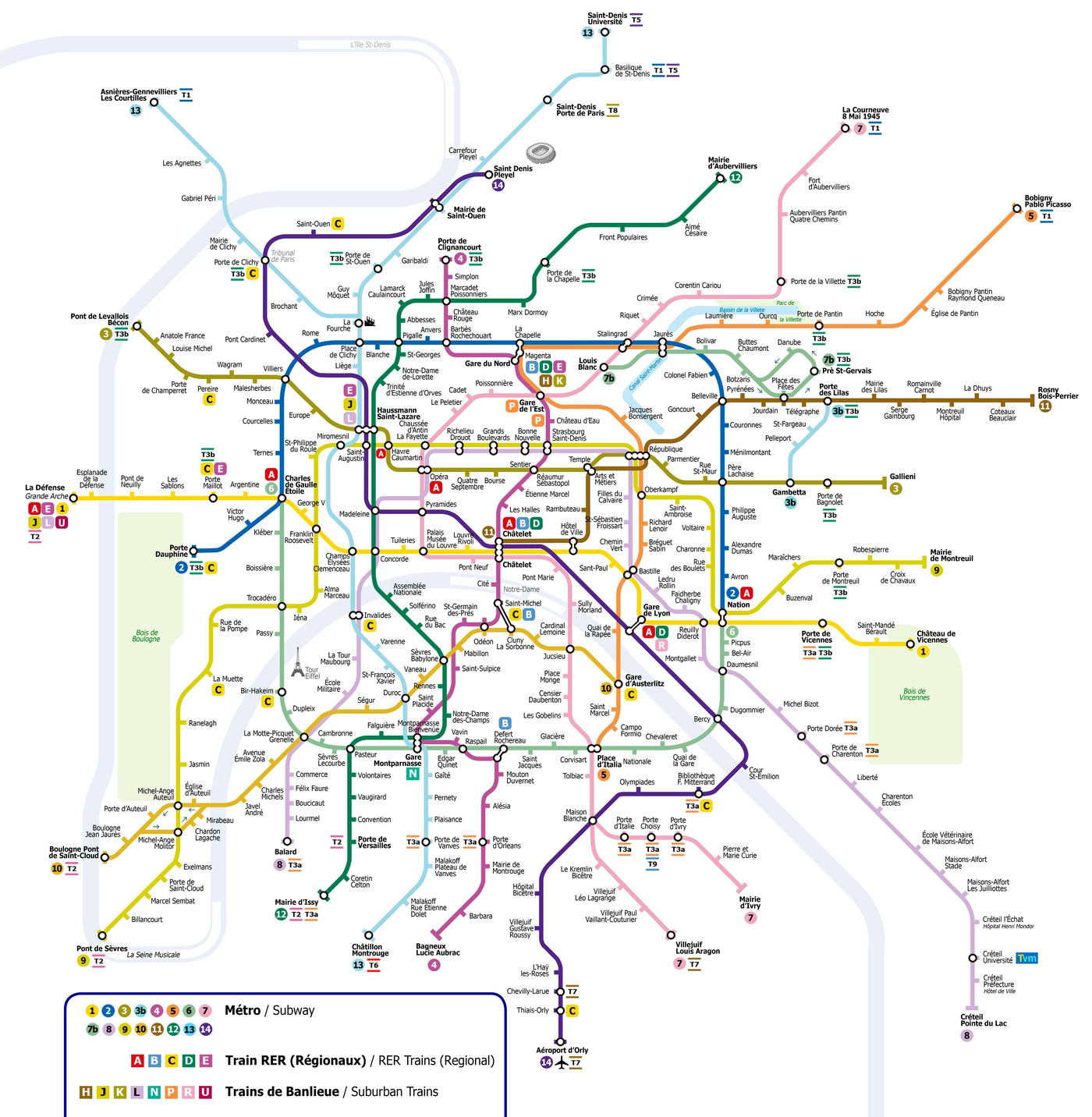
10th place. Paris — 309 stations, 226 km
9th place. Guangzhou — 316 stations, 780 km
8th place. Chongqing — 327 stations, 593 km
7th place. Wuhan — 335 stations, 553 km
6th place. Seoul — 338 stations, 360 km
5th place. Shenzhen — 432 stations, 624 km
4th place. Chengdu — 447 stations, 680 km
3rd place. New York — 472 stations, 399 km
2nd place. Shanghai — 523 stations, 906 km
1st place. Beijing — 539 stations, 909 km
This article has already appeared on Onlíner. We updated and expanded it in September 2026 — checked the data and updated the ranking of the world's largest metros.
Creating a ranking of the largest metros is not so simple. In one city, the metro is only underground; in another, the system includes above‑ground lines, monorails, and even commuter routes. In some places a significant part of the network runs on the surface but is operated by the same operator. Therefore there is no single approach to comparison.
There is also China, where new stations open so quickly that Wikipedia data often become outdated. If you count kilometers, the ranking is quickly filled by Chinese megacities: their metros have long extended beyond city limits and reached the suburbs.
Therefore we decided to count stations. This approach better shows how densely the metro covers a city and how easy it is to get there. Here, Europe and the US still have a chance to compete with China.
Paris Metro — 309 stations, 226 km
The first line of the Paris metro opened in 1900 to commemorate the World Exposition. Rapid growth occurred up to World War II: by 1939 the main part of the intracity network was completed.
The system has not only changed transportation accessibility but also left a bright mark on the appearance of Paris. The Art Nouveau entrances designed by Hector Gimara, with stylized signage, have become a landmark element of the cityscape. Today the metro still preserves this historic style while striving for high technology: fully automated lines are being introduced, and paper tickets are becoming a thing of the past, giving way to Navigo cards and digital solutions.
Today the Paris metro consists of 14 lines, 226 kilometers of track, and 309 stations. Almost 1.5 billion passengers use the system each year (4 million trips per day). The network’s development continues as part of the large‑scale Grand Paris Express project. In recent years several lines have been extended, and four new lines are slated for construction, which will add dozens of kilometers of track and expand the network far beyond the city limits.
Guangzhou Metro — 316 stations, 780 km
The Guangzhou metro serves not only the city itself but also neighboring districts of Guangdong province. The first line opened in 1997, making Guangzhou the fourth mainland Chinese city with a metro and the first in the south of the country. Since then the system has grown into a true giant: 19 lines, 316 stations, of which 61 are transfer stations, and a total length of 780 km. It ranks third in length among all Chinese metros.
The Guangzhou metro is used by an average of almost 9.3 million people daily. The construction of the metro does not stop: new lines and sections are being built. At the same time, the subway continues not only to expand but also to develop technically: in 2025, a branch with fully automatic control was opened, where trains can move without a driver.
The Chongqing metro has 327 stations, 593 km
The Chongqing metro is one of the most unusual and complex in the world. Its development began in 2005 with the launch of the first monorail line, and today it is an extensive network consisting of 327 stations and 12 lines, two of which are implemented in the format of a heavy monorail road. Such a design is vital here: Chongqing stands at the intersection of mountainous elevations and deep river valleys, and trains have to overcome steep slopes and turns, which makes the engineering solutions particularly inventive.
The system is unique in many parameters. Chongqing has the longest monorail road in the world - 56.1 km, and it is also considered the busiest. The Hongyancun station is recognized as the deepest in the world - it goes underground at a depth of 116 meters, and the Hualongqiao station, on the contrary, rises 48 meters above the surface, making it the highest. The popular Liziba, where trains pass through a residential building, has long become a symbol of the city and a tourist attraction.
In 2025, the Chongqing metro transported 1.52 billion passengers - an average of around 4.16 million trips per day.
The Wuhan metro has 335 stations, 553 km
The metro in Wuhan appeared quite recently: the first line opened only in 2004. But in just two decades, the city has gone from a complete lack of subway to the status of one of the world's giants: today it has 13 lines, 553 kilometers of tracks, and 335 stations. The pace has been and remains truly cosmic: stations were opened by the dozens.
The stations themselves are spacious, clean, and bright. The architects drew inspiration from the region's history and culture, as well as modern trends, resulting in many stations resembling cultural centers rather than mere transportation hubs.
The builders, however, had to confront complex challenges. The main one was laying tunnels under the Yangtze, China's largest river, which divides Wuhan into two parts. Currently, new tunnels are being built under the river to complete the grand project - the country's longest circular metro line. It will stretch for almost 60 kilometers, unite 37 stations, and provide 18 transfers to other lines.
The Seoul metro has 338 stations and 360 kilometers of track. The metro in Seoul appeared in 1974. In the 1980s, new branches and a circular line were added, followed by further large-scale expansion. Today, the subway has 338 stations, and its length is 360 kilometers.
It is essential to understand that despite the fact that there are more than 20 lines on the schemes, only 9 of them are considered the actual metro. The rest are suburban Korail lines, light metro, and regional branches integrated into the overall transportation system of the capital region. If we consider all these additional lines and sections, the total number of stations exceeds 600, and the length of the system is almost 1000 km.
In 2025, the Seoul metro transported about 2.74 billion passengers - an average of approximately 7.5 million trips per day.
The Shenzhen metro has 432 stations and 624 kilometers of track.
Over 40 years, China's Shenzhen has transformed from a small fishing village into one of the most technologically advanced cities in the world — and the pace of its metro construction reflects this dynamic. As recently as 2004, there was not a single metro station, whereas today there are 17 lines and 432 stations.
The stations are modern and clean, with many being similar in design, but there are also some real gems. For example, "North Ganzia" is a major transfer hub with a gigantic dome and a glass ceiling that lets in sunlight. The ceiling design is inspired by Fermat's spiral, giving the station a futuristic look.
Every day, the metro transports around 9 million people. The network is constantly evolving, and by 2030, Shenzhen's metro is expected to stretch for almost 1,150 kilometers.
The Chengdu metro has 447 stations and 680 kilometers of track.
The Chengdu metro opened just 16 years ago, in 2010, and has since made a colossal leap, becoming one of the largest in China and the world. Today, the network has 16 lines, 680 kilometers of track, and 447 stations, including transfer hubs.
A particular pride of Chengdu is its fully automated line, where trains run without drivers. The line also looks as if its stations came straight out of a futuristic magazine: with light, patterns, and transparent panels, British designers were involved in its design.
In 2025, the Chengdu metro transported 2.03 billion passengers — an average of around 5.55 million trips per day.
The New York City metro has 472 stations and 399 kilometers of track.
The peak construction period of the New York subway fell in the first decades of the 20th century, when private companies were in charge. In 1940, all networks were consolidated under city management. After that, the subway was hardly built: the city almost ran out of free space for new lines and stations, construction was expensive and complicated, the authorities paid more attention to roads, and many residents moved to the suburbs. As a result, the subway system laid in the first half of the 20th century remained almost unchanged.
Despite this, even in 2026, the New York subway remains among the world leaders in terms of the number of stations — 472.
New stations are opened very rarely and cost billions of dollars, reflecting the complexity of construction in conditions of dense urban development. For example, the construction of a station on the site of the destroyed World Trade Center cost $4 billion.
In 2025, the New York subway transported about 1.28 billion passengers. On average, on a weekday, the passenger traffic was around 4 million trips. At the same time, the New York subway operates 24 hours a day.
The Shanghai metro has 523 stations, 906 km.
Over three dozen years, the Shanghai metro has transformed from a small line into one of the largest and fastest-growing metro systems in the world. The first phase opened in 1993, and in the following 10 years, only 65 km of lines were built. However, by the mid-2000s, the pace had sharply increased: in 2007, 116 stations were being built simultaneously. The preparation for Expo 2010 gave a significant boost — new branches were opening one after another. Today, there are 21 lines, 523 stations, and 906 km.
The Shanghai Metro is a testament to both scale and technological advancement, with the length of its automated lines measured in hundreds of kilometers. The system is a world leader in terms of length and annual passenger traffic. In 2025, the Shanghai Metro averaged 10.15 million passengers per day. On working days, this figure reached 11.54 million. The busiest day of the year was December 31, with 12.93 million trips.
The Beijing Metro has 539 stations and 909 km
Beijing Metro construction