Menu
""" What will happen to the dollar if the US imposes a tax on foreign investments? """
Author and editor: Vitaly Kisterny. 15.11.2026 07:05:00
For decades, the United States has attracted foreign capital by offering investors worldwide an open market, protection of property rights, and deep financial markets. However, if Washington decides that foreign holders of US assets should pay for this privilege—for example, through a tax on foreigners buying US stocks and bonds—it would fundamentally change the dollar’s nature as a global reserve asset.
Unlike tariffs on goods, a capital tax would directly impact those who finance the US deficit and support the currency’s exchange rate. We examine how this could happen and what it would mean for the dollar.
Why foreign capital is crucial for the dollar
The US relies more heavily on foreign capital than any other major economy. The current account deficit and budget deficit are financed by inflows from abroad. Foreign investors hold a significant portion of US government debt, stocks, and corporate bonds.
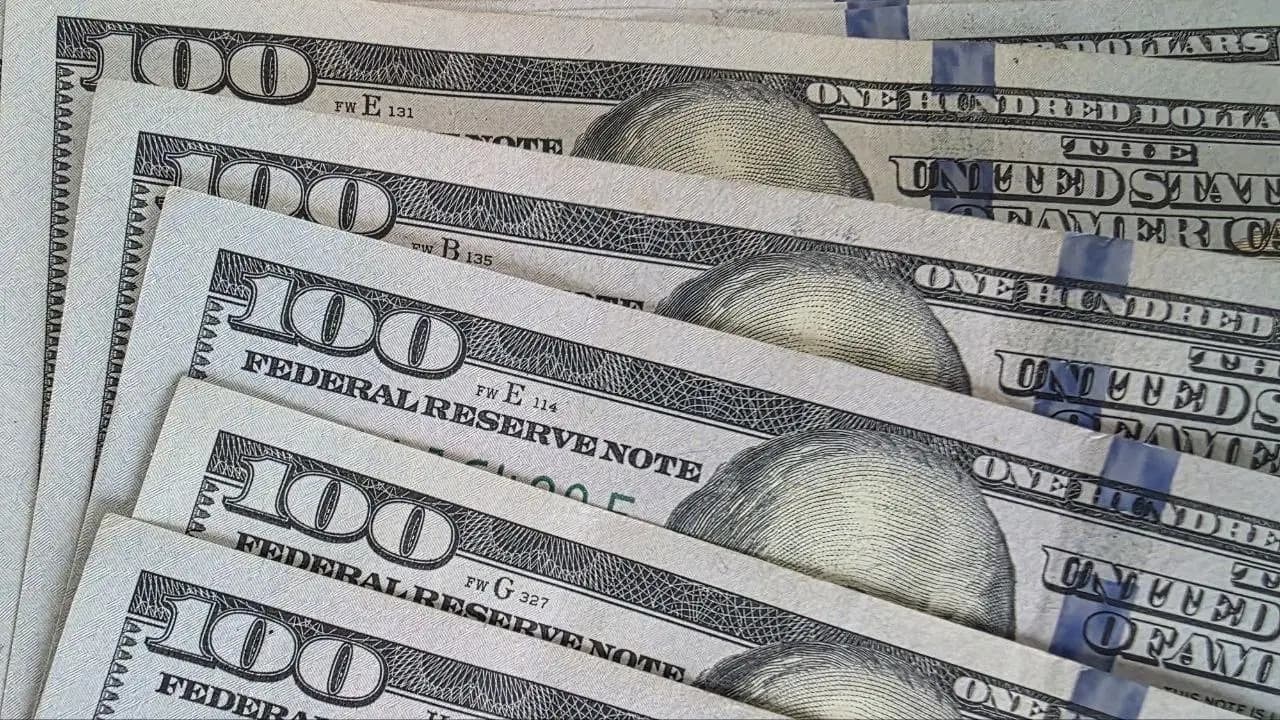
Photo: © Belnovosti / US dollar. Author: Vitaly Kisterny. This capital inflow creates demand for dollars. To purchase US assets, foreign investors must first buy dollars. This mechanism supports the currency’s exchange rate and enables the US to finance its deficit at relatively low rates.
If the US imposes a tax on foreign investment, this mechanism will break down. Investors will seek alternatives, weakening the dollar and increasing borrowing costs for the US government and businesses.
What such a tax might look like
The forms could vary. It could be a tax on foreign residents buying US stocks and bonds, a tax on income from US assets, or a fee for registering foreign investments. History provides examples of such measures: for instance, the US imposed a tax on interest income for foreigners in the 1960s to curb capital outflows.
In today’s context, such a tax could be framed as a way to address budget deficits or as a response to “unfair” trade practices by other countries. However, the economic impact would be the same: foreign capital would become less interested in US assets.
The most likely scenario is not a complete ban, but a tax on specific asset categories or investors from certain countries. This would create uncertainty, which itself would harm capital inflows.
What will happen to the dollar? """
Fragment 2/2 of the article to translate:
""" The first reaction will be a weakening of the dollar. Foreign investors will start selling US assets to avoid the tax and convert the proceeds into their own currencies, putting pressure on the dollar.
The second reaction will be an increase in bond yields. To attract investors, the US government will have to offer higher yields, which will increase borrowing costs and put pressure on the budget.
The third reaction will be a shift of capital to other markets. European, Asian, and emerging markets will benefit from the outflow of capital from the United States, which will strengthen their currencies and weaken the dollar.
Who will benefit and who will lose?
The main beneficiaries will be financial centers outside the United States, such as London, Singapore, Hong Kong, and Frankfurt, which will attract the capital leaving America. Gold will also benefit, as investors will seek assets that are not subject to taxation.
The most vulnerable will be American companies that rely on foreign capital and the US government, which will lose access to cheap financing. American households will also suffer, as rising borrowing costs will impact mortgages and consumer loans.
The ultimate impact on the dollar depends on the scale of the tax. If it is limited, the market can adapt, but if it affects a wide range of investors, the consequences will be felt for years.
What does this mean for the dollar?
A tax on foreign investment is a step that will undermine the dollar's main advantage: its role as a neutral and open asset. If the United States closes access to its market, investors will seek alternatives, weakening the dollar in the long term.
The most likely outcome is not a collapse, but a gradual decline in the dollar's share of global portfolios. The world will become more multipolar, and the dollar will become less universal. This process will begin when the United States decides that foreign capital should pay for access to its markets.
Add Белновости to your Google favorites. """