Menu
""" What will happen to the dollar if the US faces deflation? """
Fragment 1/2 of the article to translate:
""" Author: Sergey Tumanyan | Editor-in-Chief: Vitaly Kisterny | 19.11.2026 07:05:00
All the usual scenarios for the dollar involve inflation, defaults, and geopolitical shocks. But there is another, rarely discussed risk: deflation. If prices in the US start to fall consistently—due to a collapse in demand, a credit crunch, or a technological shock that sharply reduces costs—the dollar will face a problem it has not encountered since the Great Depression.
Deflation is paradoxical for a currency: it increases the purchasing power of money, but at the same time undermines borrowers' ability to repay debts and can trigger a spiral that is very difficult to stop.
Why is deflation dangerous for a currency?
At first glance, deflation seems beneficial: prices fall, the purchasing power of money increases, and savings become more valuable. However, in practice, deflation triggers a mechanism that economists call "debt deflation." Debts are fixed in nominal terms, but their real value increases as prices fall. Borrowers are forced to cut spending to repay debts, which further reduces demand and prices.
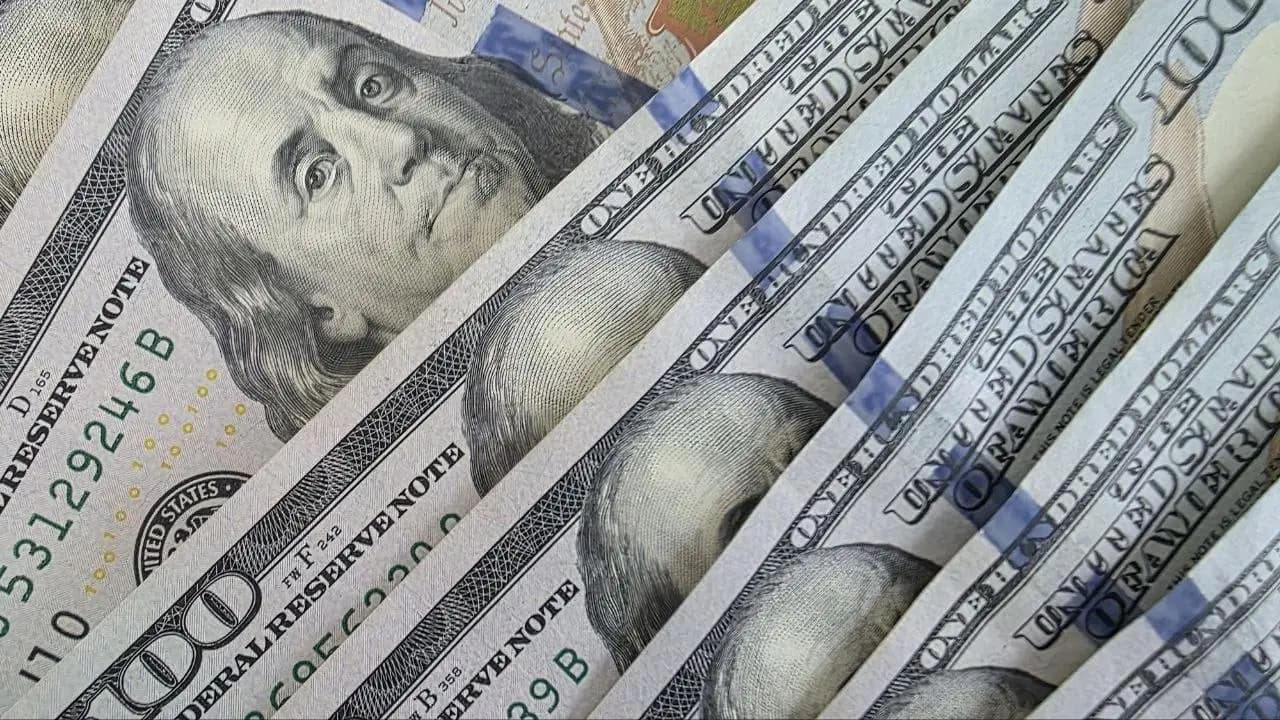
Photo: © Belnovosti / US dollars. Author: Vitaly KisternyThis mechanism destroyed the economy in the 1930s. The United States experienced deflation of about 10% per year, which led to mass bankruptcies, unemployment, and a banking crisis. The dollar did not collapse then, but its role in the global financial system was undermined for decades.
Today, the US economy is more resilient, but the risks of deflation have not disappeared. Technological shocks, such as the widespread adoption of AI, can sharply reduce production costs and prices. A credit crunch following a commercial real estate crisis can reduce access to financing. Both scenarios can trigger a deflationary spiral.
What will happen to the dollar?
The first reaction is that the dollar will strengthen. In a deflationary environment, money becomes more valuable because its purchasing power increases. Investors will start buying dollars and US bonds, which will strengthen the currency and lower yields.
The second reaction is that the Fed will find itself trapped. Rates are already close to zero, and any further decline is limited. The central bank may resort to quantitative easing or other unconventional measures, but their effectiveness in a deflationary environment is limited. """
Fragment 2/2 of the article to translate:
""" The third reaction is an economic downturn. Deflation leads to reduced production and rising unemployment, which undermines confidence in the US economy. The dollar will weaken not because it has lost purchasing power, but because the economy it represents is weakening.
Who will benefit and who will lose?
The main beneficiaries will be holders of cash and long-term bonds. Their purchasing power is increasing, while their returns remain fixed. Pensioners and households with fixed incomes will also benefit.
The most vulnerable will be borrowers—households with mortgages, companies with corporate debt, and the government with record public debt. The real value of their obligations will increase, putting pressure on budgets. Banks holding loans will also suffer from rising defaults.
For the dollar, the ultimate impact depends on the depth of deflation and the Fed’s ability to stop it. If deflation is short-lived, the dollar could even strengthen. If it persists, confidence in the currency will be undermined.
What does this mean for the dollar?
Deflation is a scenario in which the dollar faces a problem that cannot be solved by printing money. This undermines the dollar’s main advantage—the flexibility of the American monetary system. Unlike inflation, where the Fed can raise rates, deflation limits its tools.
The most likely outcome is not a collapse, but a prolonged period of stagnation and loss of confidence in the Fed’s ability to manage the economy. The dollar will remain the primary currency, but its role will be eroded as investors seek assets that are not dependent on the American economy.
Add Белновости to your favorite sources in Google. """