Menu
""" Do you know which common plants can help keep rodents away from storage areas? """
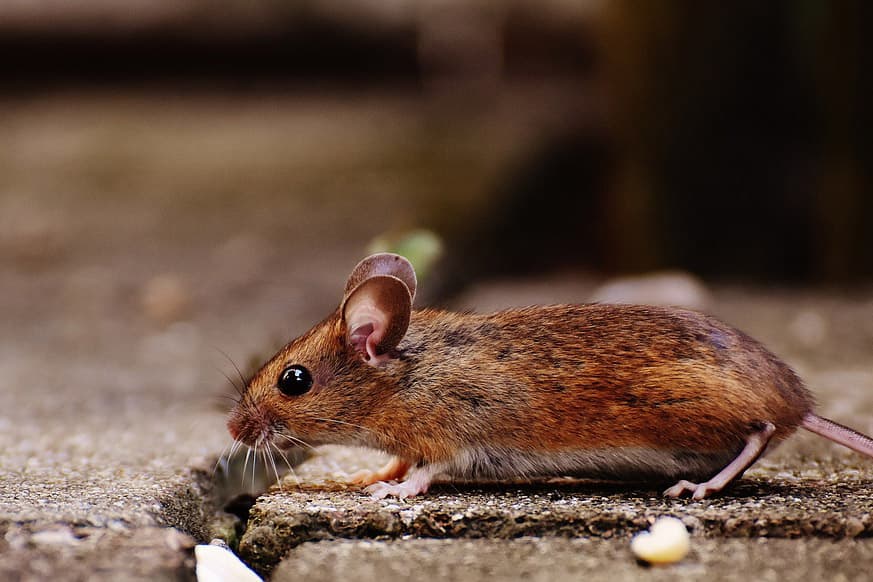
Rodents are nothing but troublemakers: they ruin carrots, gnaw on potato stores in cellars, devour grain, and leave droppings everywhere. To combat rats and mice, people typically resort to "heavy artillery"—chemical poisons. However, there’s another approach: using plants to repel them.
Elder bushes have long been planted in village gardens, near barns and warehouses where grain and other harvested crops were stored. Branches were placed in haystacks and tied around apple tree trunks—a method our ancestors used to keep rodents at bay.
These tail-bearing creatures detest the unpleasant smell of this plant. Black elderberries contain cyanide in their roots, which is toxic to them. As a result, mice will avoid settling where this shrub grows. Elderberry branches are also placed in cellars and basements.
Mice also dislike the smell of wormwood. This green plant, with its bitter, spicy aroma, repels rodents. To protect garden crops, it’s planted around the perimeter of the entire area. In cellars, branches are laid on the floor after being scalded with boiling water.
Tansy’s dense flower clusters resemble buttons, which is why it’s called buttonweed. It has a distinctive resinous, camphor-like scent. Bundles of veles grass (one of its names) were hung in stables and chicken coops to prevent diseases and annoying insects. It was also used in storage facilities to repel mice and rats. To protect harvests from mouse infestations, dry plant bushes are spread in areas where potatoes, carrots, and beets are stored.
Blackroot, which closely resembles medunitsa, is aptly called "mouse catcher." Pests cannot tolerate its smell and quickly flee from places where it grows. Additionally, the plant has rough, sticky seeds that rodents strongly dislike, as they tend to get tangled in their fur.
Therefore, blackroot is spread in cellars and basements to repel mice and rats. To enhance its effectiveness, the leaves and stems are scalded beforehand.
Rodents also cannot tolerate the rich aroma of chamomile. It is scattered in storage facilities. If you couldn’t collect and dry the flowers in summer, you can use essential oil.
Babul, with its strong and intoxicating aroma, also repels rats and mice. This plant can be used to cover a mouse hole, and its stems can be spread in cellars or cellar spaces.
Rodents also dislike the popular mint—pests cannot tolerate its sharp aroma. Dry leaves of this plant are used to layer potatoes during storage. Instead of fresh or dried herbs, you can also use mint essential oil. """
It’s long been known that rodents dislike the smell of coriander. Coriander seeds and dry stems are scattered in cellars and storage areas where harvested crops are kept, and stems are wrapped around tree trunks. Essential oils are well preserved even in dried plants.
Aconite is also deadly to rodents. All parts of the plant—stem, leaves, flowers, tubers, and even pollen—have poisonous properties, suppressing the respiratory and nervous systems.
Aconite tubers are usually used—they contain the most toxins. Initially, they are dried and ground into a powder-like state. Then, 50 g is mixed with 1 kg of mouse “food” made from flour or grain. Work must be done exclusively with gloves and a respirator. Poisonous bait for mice and rats is placed in storage areas.
Hellebore is a well-known antiparasitic agent. In ancient times, its tincture was added to water when washing one’s head to get rid of lice. This poisonous plant will also help in the fight against mice and rats.
Soak 100 g of fresh grass rhizomes in a glass of warm water for four days, adding a few drops of hydrochloric acid. Then, add grain to the resulting infusion and leave it to swell.
The rhizomes can be ground into powder, mixed with a clay-lime slurry, and applied to tree trunks, especially apple trees, whose bark mice like to gnaw on. All work should be done with a mask and gloves!
One of the dangerous “beauties” in the garden is the castor oil plant. It is often planted because of its exotic appearance: the plant looks very much like a palm tree. Its leaves, stems, and thorny fruits have a bright red, pink, purple, and even almost black color. In one season, this unusual bush can grow up to 2 meters without any care.
The castor oil plant is poisonous. Especially the seeds, which resemble ticks (hence the name). They are ground, “seasoned” with vegetable oil (unrefined), and scattered in places where rodents are present.
The lilac-pink flowers of autumn crocus appear in autumn. Plants planted in the garden repel rats and mice from the beds. Their bulbs and seeds contain colchicine, which affects the digestive system of rodents. For 20 g of seeds—1 kg of grain or cereal. The “dish” is placed in places where rodents live.
""" Foxglove is a stunning plant with flowers that resemble tiny thimbles, but it’s highly poisonous. It contains toxins that damage the digestive and cardiovascular systems of rodents, with the highest concentration found in its leaves. When dried leaves are ground and mixed with grain or cereals, they create a deadly poison for mice. It’s best to prepare this mixture while wearing gloves. """