Menu
""" Belarus's GDP reached 102.1% over a ten-month period. """
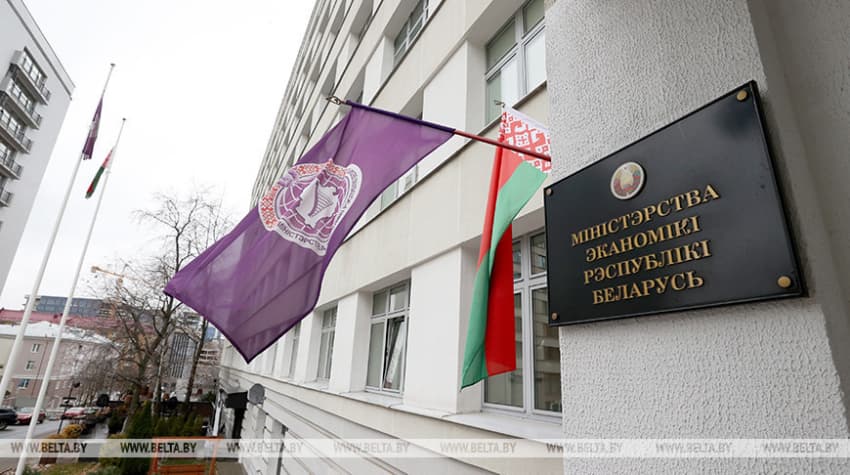
Belarus’s economy grew by 2.1% in the period from January to October 2026 compared to the same period last year, with GDP growth reaching 102.1%. The Ministry of Economy’s press service described this as balanced growth.
In absolute terms, GDP at current prices reached 269.9 billion rubles. Four industries drove growth, contributing most to the increase in gross value added. As expected, agriculture led with a growth rate of 104.9%. This was driven by an early harvest of corn for grain and an expansion of sown areas for winter crops, resulting in a 1.1 percentage point acceleration compared to the previous month. The transport sector grew by 104.8%, with both passenger and freight traffic showing strong dynamics, increasing by 7.3% and 2.8%, respectively. The information and communication sector grew by 104%, fueled by an influx of workers into the IT sector and accelerated telecommunications activity. Trade was the fourth leader, with a growth rate of 103.9%.
Consumer demand remains a key pillar of the economy. Retail turnover increased by 8.9% from January to October, driven by two factors: an 8.2% rise in real incomes and low inflation of 4.7% year-on-year. Investments in fixed capital grew by 2.6%, while business investments in technological modernization and equipment acquisition increased at a faster pace, reaching 104.3%. In the construction sector, over 3 million square meters of housing were commissioned in ten months, including 367,700 square meters of state-supported homes. Warehouse stocks continued to decline, with finished goods valued at 11 billion rubles as of November 1, representing 74.1% of average monthly production—a 7.1% decrease from the previous year.
The foreign economic sector outperformed overall GDP growth. According to balance of payments methodology, exports of goods and services in January-September were 13.7% higher than in the same period in 2025, with goods exports increasing by 11.1%. The geography of supplies is shifting: positions in CIS markets strengthened by 22.1%, while exports to countries of the far arc increased by 1.4 times. Service exports showed the highest growth rate at 22.8%, making this segment one of the fastest-growing areas of foreign trade. The stable operation of the economy was also reflected in incomes: the average salary from January to September was about 3,000 rubles, and the average old-age pension was 1,068.6 rubles. """