Menu
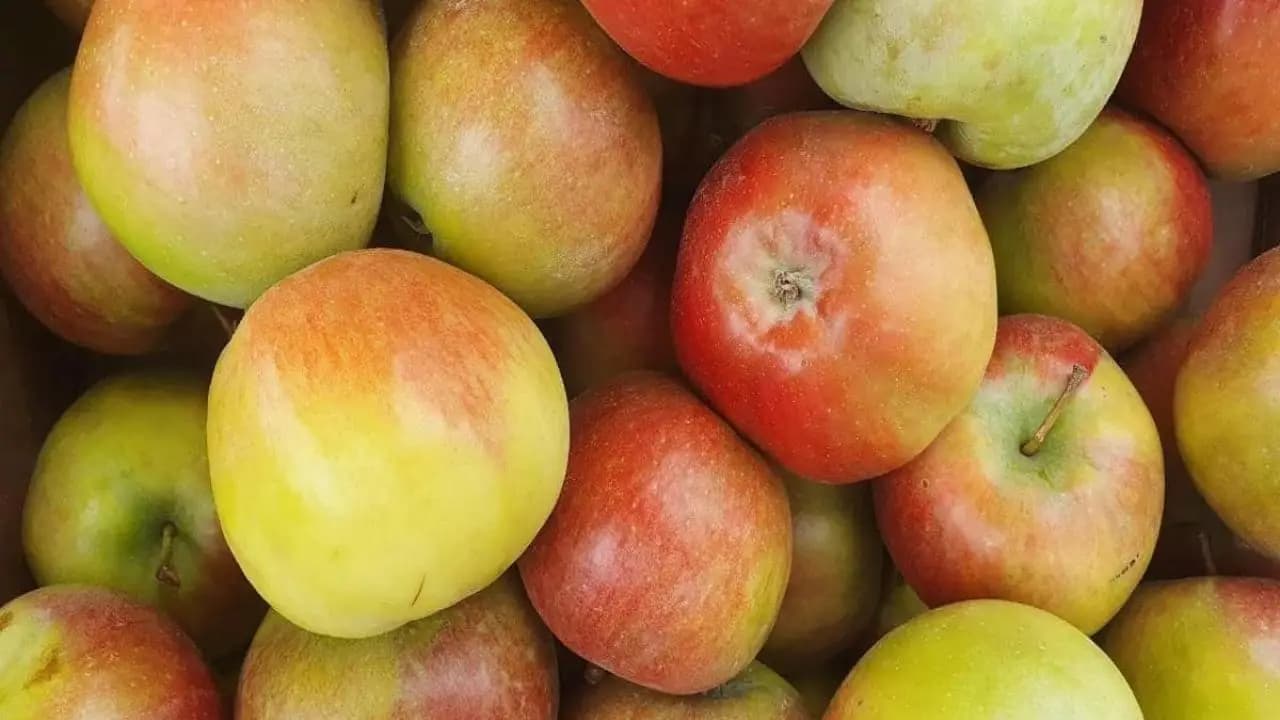
Apples in Belarus have dropped in price to 3.71 rubles due to oversupply
Author and Editor-in-Chief: Vitaly Kisterny 11/28/2026 17:24:00
Today, the Ministry of Antitrust Regulation and Trade (MART) explained how the retail price for socially significant vegetables of the traditional borsch vegetable set from stabilization funds is formed. The scheme is two-tier: the Ministry of Agriculture and Food sets the maximum selling prices for state-order products, and MART approves the maximum retail prices based on them. The agency monitors the market situation and adjusts prices if necessary, BELTA reports.
Apples have dropped in price due to oversupply
The maximum retail price for apples was initially set at 4 rubles 80 kopecks. Then, due to excess supply, it was reduced to 3 rubles 71 kopecks this season.
The adjustment mechanism works like a two-way turnstile: if there is a threat of a deficit, additional suppliers are sought, and if consumption is slow, products are allowed to be diverted for other purposes under Resolution No. 399.
Photo: © Belnovosti / Apples that have dropped in price in Belarus. Author: Vitaly Kisterny. Such a decision is made upon the application of suppliers with the consent of procurers confirming that they no longer need the products.
Fines for objective price violations
Natalia Cherepovych, Head of the Consumer Market Department at the Trade and Public Catering Organization Directorate of MART, spoke about the agency's reaction to price increases.
Everything is individual and depends on the situation, but if we see an objective violation of pricing or legislation, this can lead to fines.
Last season, such cases were identified selectively. There were no mass consumer complaints about the quality of vegetables during the past off-season.
A year earlier, there were more complaints — at that time, problems arose with potatoes, specifically due to their small size.
Each appeal is considered individually, in cooperation with the Ministry of Agriculture and Food and regional executive committees: depending on the situation, inquiries are sent and the problem is worked through.
Stabilization funds are calculated in February
The assortment of retail facilities must include goods from stabilization funds, which also include garlic and leafy greens.
A seasonal restriction applies to basic vegetables — from August to May.
Reserves are formed in advance, and needs are calculated as early as February to avoid a projected shortage.
During the off-season, the Ministry of Agriculture and Food, together with agricultural committees, trade departments of regional executive committees, and the Minsk City Executive Committee, monitors the depletion of the funds.
If reserves are being depleted faster than planned—for example, if more was consumed in December than expected—the agency, together with local authorities, forecasts the further situation.
Belnovosti on GoogleAdd to favorite sources