Menu
Food security and national development: current issues discussed in Bobruisk.
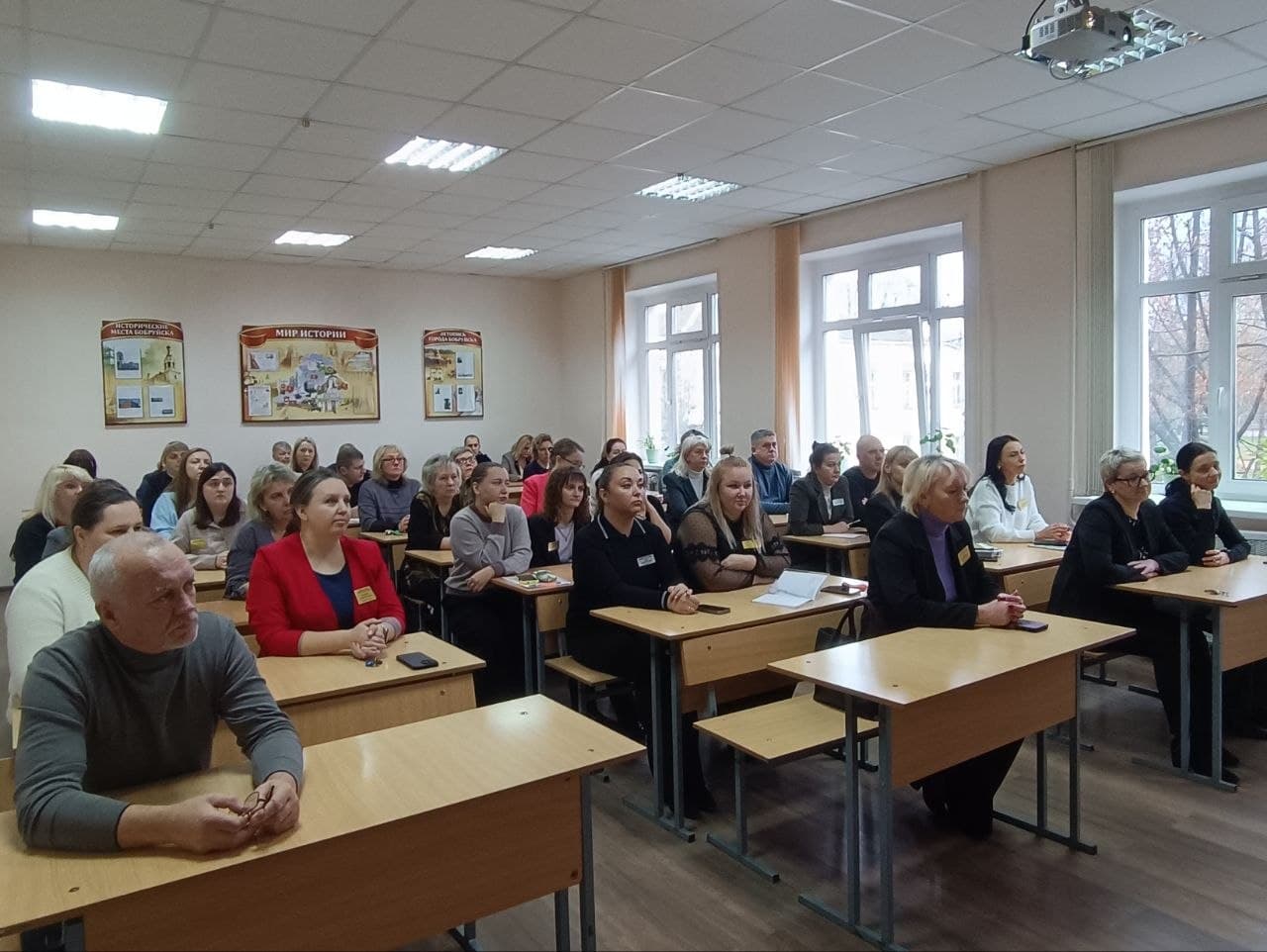
On November 19, the deputy chairman of the Bobruysk City Executive Committee, Alla Bogatenko, met with the labor collective of the FanDOK enterprise as part of the Unified Day of Information. The main topics of the meeting were "Belarusian Karavai - 2026: Food Security" and "The All-Belarusian People's Assembly - a Guarantee of Stability and Progressive Development of the Country".
One of the key areas of the socio-economic strategy of the Belarusian state remains the development of rural areas and agricultural production. This is not just a sector of the economy, but the foundation of food security. And in modern conditions, the influence of the agricultural sector on the stable development of our country is only increasing.
The Belarusian model of food security is based on a simple but wise principle: to provide for oneself through its own production.
The fact that production volumes for a number of positions have significantly exceeded domestic needs has allowed Belarus to become one of the leading world exporters of food. Belarus is among the top 5 countries in the world in terms of supplies of dairy products and among the top 15 in terms of exports of poultry meat, beef, and sausage products.
Belarus supplies food to more than 115 countries around the world, with about 67% going to 75 Russian regions. The largest partner after Russia in the EAEU, with a stable annual increase in demand, is Kazakhstan. The main market for the "far arc" is China.
The popularity of Belarusian products both within the country and on foreign markets is due to the fact that they are produced according to strict state standards (GOSTs), which guarantee naturalness, high quality, and traditional taste. "Belarusian means high-quality" - this phrase has become a well-known slogan and a stable brand, reflecting the impeccable reputation of goods produced in our country.
One of the main achievements of the agro-industrial complex is that today Belarus is capable of producing everything necessary within the country and from its own resources. For example, the innovative press-pickup combine produced at the Bobruisk "Agromash" is a testament to this. Moreover, Belarusian products are in high demand abroad. This level of food security fully confirms the viability and effectiveness of the Belarusian model, emphasized Alla Bogatenko.
Another important topic of discussion was the All-Belarusian People's Assembly.
Looking back three decades, it is hard for each of us living in a sovereign and independent Belarus to imagine the degree of anxiety, uncertainty, and hopelessness that prevailed in the 1990s. The collapse of the USSR disrupted established economic ties. In one moment, the unified system of management collapsed, factories lost suppliers of raw materials and markets for their products. Rampant inflation, empty store shelves, and a shortage of goods - this was the beginning of our independence.
The All-Belarusian People's Assembly is an embodiment of a deep historical tradition, starting from the Polotsk Veche, the All-Belarusian Congress of 1917, and the People's Assembly of Western Belarus in 1939.
The enduring value of the Assembly as an instrument of direct democracy lies primarily in providing citizens with the opportunity for direct discussion and decision-making on the most pressing issues of state and public life.
The All-Belarusian People's Assembly has proven that fateful decisions in our country are made collectively, openly, and exclusively in the interests of the people. Over three decades, it has transformed into a reliable guarantor of the continuity of our course and sovereignty, a political shield that excludes any risks of social division, and has consolidated a unique Belarusian model of democracy, in which the voice of a simple worker has the same weight as the voice of the highest official.
On November 19, in Bobruisk, during the Unified Day of Information, they discussed Belarus' food independence, global problems with providing the population with food, and the role of the All-Belarusian People's Assembly. The collective of the state institution "Hockey Club 'Bobruisk'" met with Vladimir Knyga, Deputy Chairman of the City Executive Committee.
The first topic of the meeting was "Belarusian Karavai - 2026: Food Security of the Country". Vladimir Kniha explained why the development of its own agro-industrial complex has strategic importance for the state. He drew attention to the situation in the world, where millions of people face a shortage of food. According to the FAO, 266 million people in 47 countries are in a situation of acute hunger, and hundreds of millions more suffer from chronic malnutrition.
Against this backdrop, Belarus is betting on its own production and already provides itself with domestic agricultural products and food by 95%. As noted during the conversation, food security is directly linked to the independence of the state. This idea was accurately expressed by President Alexander Lukashenko: "Food is politics, both domestic and foreign".
The second topic was dedicated to the All-Belarusian People's Assembly as a guarantee of stability and progressive development of the country. Vladimir Kniha recalled the Concept of National Security adopted at the first meeting of the VII All-Belarusian People's Assembly, spoke about the significance of the Assembly in determining the strategic directions of Belarus' development, and shared information that 10 delegates from Bobruisk are participating in the work of the Assembly.
He paid special attention to the fact that the All-Belarusian People's Assembly brings together representatives of different segments of society and provides an opportunity to participate in making key decisions for the country. One of the key principles of this system is that "the voice of a simple worker has the same weight as the voice of the highest official".
The meeting continued with a communication with the labor collective. Among the questions raised by the workers of the hockey club was the resumption of evening bus route No. 25a. The appeal was accepted, and the situation was taken under control.
In addition, Vladimir Kniha spoke about the current situation in the city. More than 20,000 residents of Bobruisk have already been vaccinated against the flu. He separately noted the personnel achievements: this year, the city on the Berezina received a record influx of young specialists, with about 700 people coming to work in various sectors of the city's economy and social sphere.
On November 19, the head of the education department of the Bobruisk City Executive Committee, Elena Lisitsa, met with the labor collective of School No. 32 in Bobruisk as part of the Unified Day of Information. The main topics of the meeting were "Belarusian Karavai - 2026: Food Security" and "All-Belarusian People's Assembly - a Guarantee of Stability and Progressive Development of the Country".
One of the key areas of the socio-economic strategy of the Belarusian state remains the development of rural areas and agricultural production. This is not just a sector of the economy, it is the foundation of food security. And in modern conditions, the influence of the agricultural sector on the stable development of our country is only increasing.
Belarus supplies food to more than 115 countries around the world. Of these, about 67% goes to 75 Russian regions. The largest partner after Russia in the EAEU with a stable annual growth in demand is Kazakhstan. The main market of the "far arc" is China. According to the results of 2025, the export of food products and agricultural raw materials reached a record level of $10 billion, or 118% of the 2024 level. The increase in foreign exchange earnings was $1.6 billion.
On store shelves, the share of domestic butter and eggs is 100%, meat and meat products is 99.5%, sugar is 99.3%, cheese is 96.6%, flour is 95.2%, and potatoes is 90.5%.
Another important topic of discussion was the All-Belarusian People's Assembly. Looking back three decades, it is hard for each of us living in a sovereign and independent Belarus to imagine the degree of anxiety, uncertainty, and hopelessness that prevailed in the 1990s. The collapse of the USSR disrupted established economic ties. In one moment, the unified system of management collapsed, factories lost suppliers of raw materials and sales markets. Crazy inflation, empty store shelves, and a shortage of goods - this was the beginning of our independence.
Speaking about the All-Belarusian People's Assembly, Elena Lisitsa touched on the history of its creation, because it was at the first Assembly that a clear development strategy was formed, which determined the country's priorities for years to come.
As Elena Sergeevna emphasized, today the All-Belarusian People's Assembly is the highest representative body of people's power, which acts as a guarantee of stability and provides citizens with the right to openly make fateful decisions, because the voice of a simple worker has the same weight as the voice of the highest official.
On November 19, Natalia Lomakо, the head of the department for handling appeals from citizens and legal entities of the city executive committee, spoke at the Bobruisk Trade and Economic College as part of the Unified Day of Informatization. She talked about the food security of Belarus and the role of the All-Belarusian People's Assembly in determining the country's strategic development directions.
The topic "Belarusian Karavai - 2026: Food Security of the Country" was dedicated to the results of the harvest campaign and the sustainable operation of the agro-industrial complex. In Belarus, more than 11 million tons of grain have been harvested, including rapeseed and corn, with an internal demand of around 7 million tons. The high level of self-sufficiency in basic products allows for the provision of the internal market and the development of food exports. The labor of agricultural workers, the quality of domestic products, and the stability of production play an important role in this.
The national tradition has become the holding of festivals-fairs "Dazhynki", during which the labor of Belarusian agrarians is honored. This year, "Dazhynki" marked its 30th anniversary, Natalia Lomakо said.
The participants of the meeting separately discussed the topic "The All-Belarusian People's Assembly - a guarantee of stability and progressive development of the country". Natalia Lomakо talked about the status and significance of the All-Belarusian People's Assembly as a constitutional body that determines the strategic development directions of Belarus. Its activities are connected with the consideration of key issues of state and public life, strengthening national security, public consensus, and the continuity of the country's development.
In conclusion, I would like to quote the words of the Head of State, Alexander Grigorievich Lukashenko, which he addressed to each of us: "Belarus, if we continue to take care of it, is a country of the future. A secure, safe, and comfortable future for all and for each. And all this is within our power!" Natalia Sergeyevna summed up.
On November 19, the Unified Information Day was held at the Specialized Educational and Sports Institution “Children and Youth Sports School No. 4 in Bobruisk.” The head of the Sports Department of the Bobruisk City Executive Committee, Alexey Voronkov, spoke with the staff about two important topics – food security and the All‑Belarusian People’s Assembly as a guarantor of stability and progressive development of the country.

The development of rural areas and the agro‑industrial complex remains a key priority for Belarus, because agriculture is the foundation of food security. The Belarusian model is built
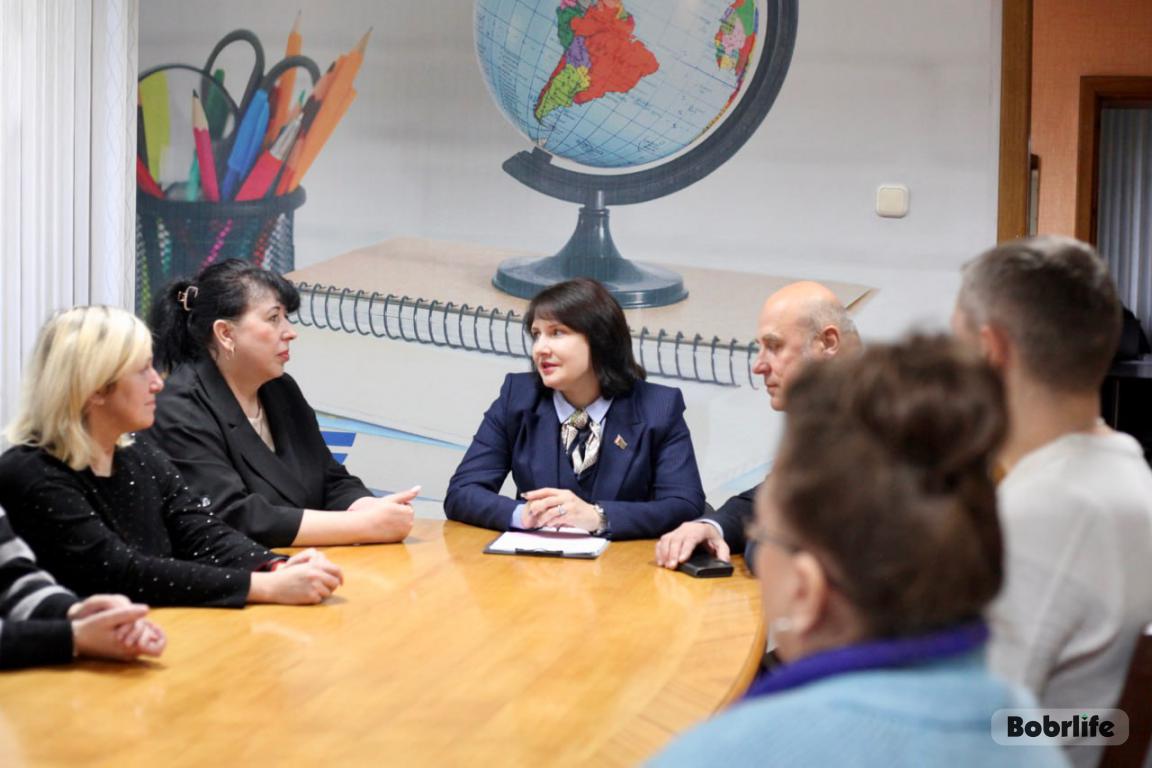
At the State enterprise “Gorsvet” of the city of Bobruisk, Olga Belenchikova, deputy head of the ideological work and youth affairs department of the Bobruisk City Executive Committee, held a meeting with employees.
The discussion of achievements began with numbers. This year, Belarus once again confirmed its status as a strong agricultural state: the total grain harvest, including corn and rapeseed, exceeded 11.4 million tonnes. For the first time in history, the Minsk region surpassed the 3 million tonne threshold, and seven other districts in the country each collected more than 200,000 tonnes. Export revenue from food is expected to be about 11 billion dollars.
Olga Belenchikova emphasized that these achievements also owe much to Bobruisk enterprises:
— We can see that our own “Bobruiskagromash”, “Belshina” are involved. They also work and also contribute to the development of agricultural machinery, and accordingly, of course, this bears fruit in the harvest.