Menu
How the ideal compound feed is created at Agrokombinat Skidelsky OJSC
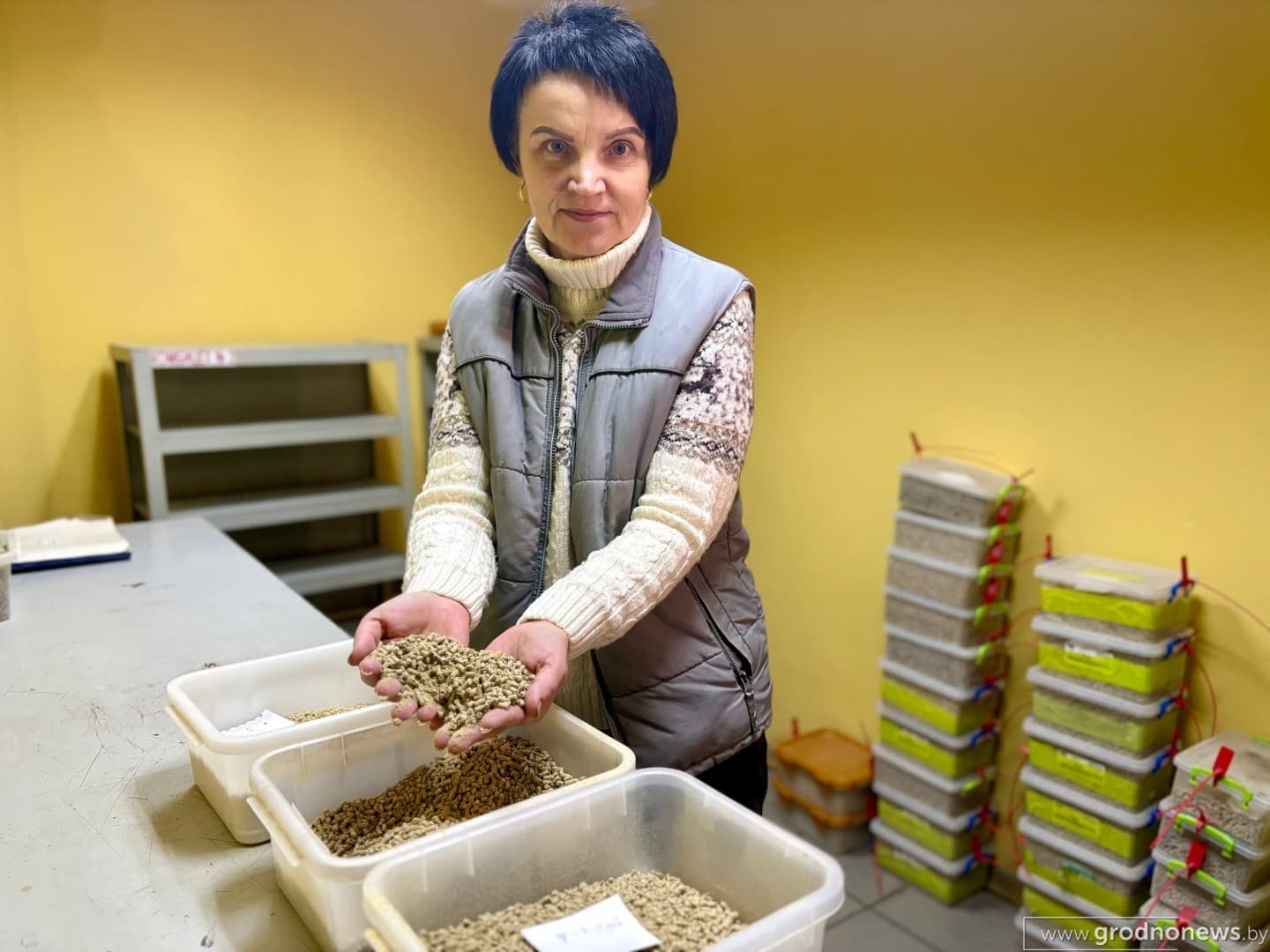
For more than thirty years, the deputy head of the feed production department at JSC Agrocombinate Skidelsky, Zhaneta Ovsyechik, has dedicated herself to her native enterprise. Her professionalism and dedication directly determine the high yields, the growth of the pig herd, and the poultry growth on the complexes.
She found happiness in the Grodno region
Zhaneta Ovsyechik is one of those people on whom the production relies. Originally from the Mogilev region, she moved to Grodno in 1993 right after graduating from the Grodno Agricultural Institute. At first, the young animal scientist felt drawn home, but it was here that she found true happiness: she started a family, became a mother, and today she rejoices in the successes of her two grandchildren.
Together with her husband, who has been working here as an electrician since 1987, they invested the most precious thing into the enterprise – their youth and mature years. Since 2018, the seasoned specialist has held the responsible position of deputy head of the feed production department. She does not merely manage processes in two workshops, but truly cares about the outcome. Even with a standard five‑day schedule, the worker is ready to come to work on a weekend if the common task demands it.
– They say you are useful where you were born, but I am convinced that a person is needed where he can show himself, – shares Zhaneta Ovsyechik. – I have realized myself in my family and in my beloved profession. There are no random people in our production. Only those who know how to take responsibility and value every kilogram of product
The deputy head’s task is to keep a finger on the pulse of a large-scale technological process across two workshops simultaneously. Work is organized strictly according to requisitions: it is important not only to deliver the required volume of products on time, but also to precisely adhere to the specified recipe. When good feedback is received from livestock complexes and the poultry farm, the team is genuinely delighted.
The second workshop was put into operation in December 2014 to meet the needs of the new poultry farm in order to fully supply the growing livestock population with feed. This production site specializes in manufacturing products exclusively for meat-type poultry. All other types of feed—for cattle, pigs, and egg-laying crossbreeds of poultry—are produced in the first workshop.
Today, the capacity of the second workshop is 200 tons of products per 12-hour work shift, which runs from eight in the morning to eight in the evening. By comparison, the first workshop operates in two shifts, including the night shift, and produces 430 tons per day. All products of the second workshop are intended exclusively for the enterprise's own needs and are dispatched to the sites of the Skidel Poultry Farm.
The difference in the recipe is fundamental: an anti-coccidial agent is introduced into premixes for meat poultry for disease prevention. Gentler additives are used for laying hens, since their eggs go not only for sale but also into incubators, and therefore the product must retain all vitamins for healthy offspring.
The basis of the recipe is the grain group, which includes only corn and wheat. Protein raw materials of two types are used: vegetable and animal. Rapeseed meal is produced in-house, as the agricultural complex operates its own rapeseed processing workshop. Soybean and sunflower meal are purchased from Belarusian suppliers. Animal-origin protein is represented by meat-and-bone meal. Common salt is an essential component of the recipe that makes the feed more palatable for the poultry. The mineral block is formed by Mogilev chalk and defluorinated phosphate, which is supplied from Russia. The composition is completed by premixes containing all necessary vitamins, macro- and microelements.
"We produce complete compound feed with protein, amino acids, and vitamins, which guarantees the proper development of the poultry," the specialist notes. "The weight gain and health of the livestock depend on a combination of factors: housing conditions, microclimate, and compliance with stocking density norms in the poultry houses. Our task as manufacturers is to strictly adhere to the recipe so that the feed remains nutritious and yields stable results."