Menu
Dangerous bed bugs have appeared in Belarus. Where they have already been found and what they threaten
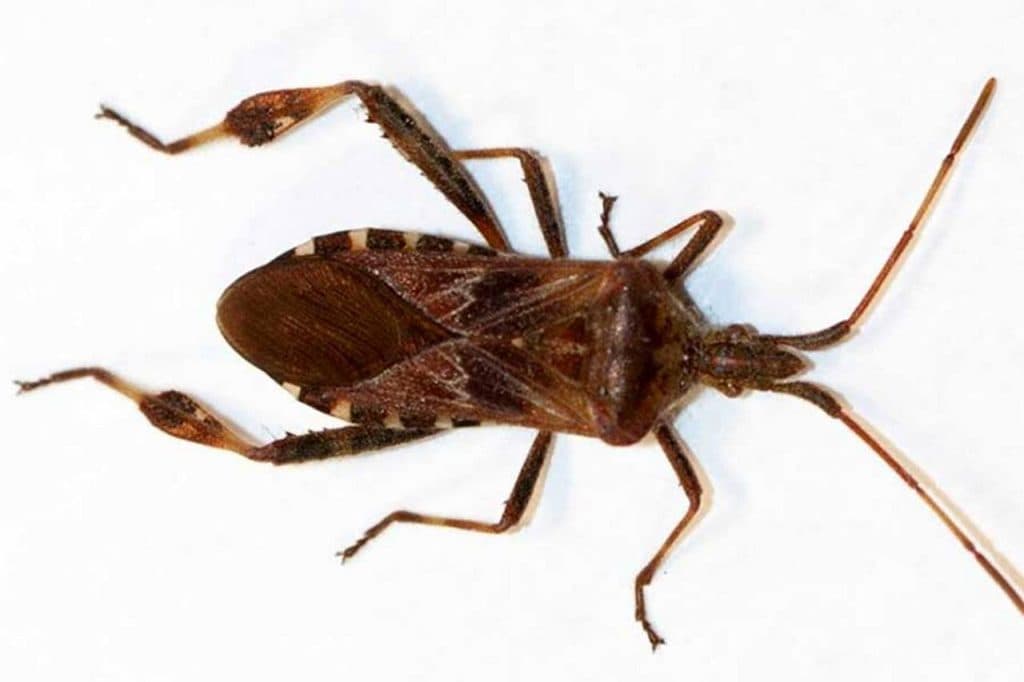
In Belarus, insects from North America are being encountered more and more often. Over the past few years, two foreign species of bugs have made their way to our country and already pose a threat to trees. One of them has managed to spread almost throughout Belarus, and the northernmost point of its discovery was Minsk.
We are talking about the American coniferous bug and the oak lace bug. Olga Nayman, a senior researcher at the National Academy of Sciences of Belarus, told the Navuka newspaper about where the pests have already appeared and why Belarusian scientists are closely monitoring them.
The American coniferous bug was the first to be discovered in Belarus. It was first spotted in 2020 in the Bialowieza Forest.
Since then, the insect has managed to colonize almost the entire country. It is most often found in the Brest and Gomel regions. Since 2024, the pest has also appeared in the Grodno region.
It is especially noteworthy that the bug has reached the capital. According to Olga Nayman, Minsk has become the northernmost point of its spread in Belarus.
So far, this species has not been found only in the Vitebsk and Mogilev regions.
Another alien pest, the oak lace bug, first came into the view of Belarusian scientists in August 2025. It was discovered in the Kobrin district.
So far, specialists do not have data on the further spread of this insect in Belarus. Observations are ongoing.
The American coniferous bug feeds on more than 40 species of coniferous plants, including common pine.
Due to the activity of the pest, trees produce significantly fewer seeds. This is a particularly sensitive problem for Belarus, since our country is engaged in the export of seeds of coniferous species.
There is also another danger: the bug is capable of carrying a fungus that causes weakening and drying of pines.
The oak lace bug also causes significant damage to trees. The insects settle in colonies on the leaves and suck the sap out of them. As a result, the foliage falls off prematurely, trees tolerate frost worse, and in some cases may die.
Moreover, the pest attacks not only oaks. Its diet also includes apples, currants, and rose hips.
Currently, Belarusian scientists, together with specialists from Bellesozaschita, are monitoring the appearance and spread of these insects.
Both species have already been included in the unified list of quarantine objects of the EAEU. Further research should help develop ways to combat pests, taking into account the climatic conditions of Belarus.